Imagine a world where your conversations feel as real as if you’re sitting across from someone, even when they’re miles away. That’s the promise of holographic technology. It’s not just science fiction anymore—it’s becoming a reality.
Holography uses light waves and laser beams to create stunning 3D images that seem to float in space. Unlike traditional screens, these displays don’t require special glasses. They immerse you in a scene, making it feel alive and tangible. It’s a leap forward in how we capture and share moments.
I’m fascinated by how this technology is evolving. From virtual reality to cost-effective displays, holography is reshaping industries and redefining communication. It’s not just about seeing an image—it’s about experiencing it in a whole new way.
In this article, we’ll dive into the science behind holographic displays, explore their potential applications, and discuss how they could transform our daily lives. The future of communication is here, and it’s more exciting than ever.
Key Takeaways
- Holographic technology creates immersive 3D images using light waves and laser beams.
- It eliminates the need for special glasses, making it more accessible.
- Advances in holography are bringing dynamic 3D displays into everyday communication.
- This technology has applications in industries like healthcare, entertainment, and remote work.
- The future of holographic communication promises enhanced global collaboration and new forms of expression.
Introduction to the Future of Holographic Communication
From science fiction to everyday reality, holography is changing the game. This technology has come a long way since its early days, evolving from experimental setups to practical displays that redefine how we communicate.
The journey began with Dennis Gabor, who laid the foundation for holography in the 1940s. His groundbreaking work in wavefront reconstruction paved the way for modern advancements. Today, we’re seeing the fruits of that science in stunning 3D displays that bring images to life.
One of the most exciting aspects of holography is its ability to capture full 3D light fields. This creates parallax and depth, making images incredibly lifelike and interactive. It’s a whole new way to experience video content, offering a level of immersion that traditional screens simply can’t match.
As this technology matures, it’s finding its place in various industries. From interactive media to remote collaboration, holography is reshaping how we connect with the world. It’s not just about seeing an image—it’s about stepping into a new reality.
In the following sections, we’ll dive deeper into the technical details and explore how holography is set to transform our daily lives. The future of communication is here, and it’s more exciting than ever.
Hologram Tech: A Game-Changer in Communication
The way we connect is evolving faster than ever before. Hologram tech is at the forefront of this transformation, enabling realistic 3D communication systems that feel almost tangible. It’s not just about seeing an image—it’s about stepping into a new reality.
At its core, this technology relies on advanced systems that project 3D images using light waves and laser beams. Unlike traditional screens, these displays don’t require special glasses. They immerse you in the scene, making interactions feel natural and lifelike.
What excites me most is how accessible this system is becoming. Thanks to breakthroughs in science and engineering, companies are integrating holographic techniques into everyday devices. From virtual meetings to interactive learning, the possibilities are endless.
One standout example is the use of holograms in remote collaboration. Imagine attending a meeting where your colleagues appear as lifelike 3D projections. It’s not just convenient—it’s transformative. This technique is already being adopted by forward-thinking companies, paving the way for a new era of communication.
In my view, these innovations signal a shift toward more interactive and immersive experiences. The future of communication isn’t just about words—it’s about connection. And with hologram tech, that connection feels more real than ever.
The Science and Art of Holography
The fusion of science and art has always been a driving force behind innovation. In the world of holography, this blend is particularly striking. It’s a field where technical precision meets creative expression, resulting in stunning 3D images that captivate the imagination.
Understanding Optical Holography and Interference Patterns
At its core, optical holography relies on the interplay of laser beams. A single beam is split into two: the object beam and the reference beam. The object beam reflects off the subject, while the reference beam remains unchanged. When these beams meet, they create interference patterns.
These patterns are recorded on high-resolution film or specialized materials. The result is a detailed image that captures not just the shape of the subject, but also its depth and texture. This technique is what gives holograms their lifelike quality.
Dennis Gabor’s Legacy and Early Innovations
Dennis Gabor, a pioneer in this field, laid the groundwork for modern holography. His work in the 1940s focused on wavefront reconstruction, a concept that earned him the Nobel Prize in Physics in 1971. At the time, many dismissed his ideas as impractical, but Gabor’s vision proved transformative.
“Holography is not just a scientific tool—it’s a new way of seeing the world.”
Gabor’s innovations at the university level paved the way for today’s advancements. His ability to merge science with creativity inspired a generation of researchers to explore the artistic potential of holography.
Today, this form of imaging is not just a technical marvel—it’s an artistic medium. From interactive displays to immersive installations, holography continues to push the boundaries of what’s possible. It’s a testament to the power of blending science and art to create something truly extraordinary.
How Holograms are Created and Displayed
Creating lifelike 3D visuals involves a blend of precision and creativity, making holograms a marvel of modern innovation. At the heart of this technology lies the use of laser beams and light waves to craft images that appear to float in space. It’s a process that combines science and art to produce something truly extraordinary.
Laser Beams, Light Waves, and Interference Techniques
The creation of a hologram begins with a laser beam split into two parts: the object beam and the reference beam. The object beam reflects off the subject, while the reference beam remains unchanged. When these beams meet, they create interference patterns. These patterns are recorded on specialized materials, capturing not just the shape but also the depth and texture of the subject.
This technique relies on diffraction, where light waves bend around objects to recreate the original scene. The result is a 3D image that feels almost tangible. It’s a process that requires precision, but the outcome is worth the effort.
Stereoscopic Versus Dynamic Holographic Displays
Not all holograms are the same. Stereoscopic displays offer fixed views, creating a sense of depth but lacking movement. On the other hand, dynamic holographic displays can change in real time, offering a more immersive experience. These displays use advanced projection systems to bring images to life without the need for special glasses.
I find dynamic displays particularly fascinating because they push the boundaries of what’s possible. They allow for interactive experiences, making them ideal for applications like virtual meetings or educational tools. The field is constantly evolving, and I’m excited to see where it goes next.
In my view, the key to high-quality holograms lies in the balance between capture and display. It’s not just about creating an image—it’s about making it feel real. And with advancements in technology, that reality is closer than ever.
Applications in Healthcare, Education, and Beyond
The potential of 3D visuals is reshaping industries in ways we never imagined. From healthcare to education, this technology is proving to be a game-changer. It’s not just about innovation—it’s about solving real-world problems with precision and creativity.
Revolutionizing Medical Imaging and Surgical Planning
In healthcare, 3D displays are transforming how doctors approach medical imaging. These tools provide detailed representations of the human body, allowing for more accurate diagnoses. I’ve seen how this application helps surgeons plan complex procedures with greater confidence.
For example, mixed-reality systems like Holo Anatomy® enable doctors to visualize organs and tissues in real time. This reduces risks during surgery and improves patient outcomes. It’s a powerful tool that’s setting new standards in medical science.
Enhancing Learning with Interactive 3D Visuals
Education is another field benefiting from this technology. Traditional 2D teaching methods often struggle to convey complex concepts. With interactive 3D displays, students can explore subjects like anatomy in a whole new way.
I’ve observed how these applications engage learners and improve retention. Tools like HoloLens allow students to interact with 3D models, making lessons more dynamic and memorable. It’s a shift that’s redefining the world of education.
These advancements are not just about innovation—they’re about meeting the need for better learning and healthcare solutions. The future is here, and it’s more immersive than ever.
Holograms in Entertainment and Live Events
The stage has always been a place of magic, but now, it’s becoming a canvas for innovation. Holographic displays are transforming live events, creating experiences that blur the line between reality and illusion. From iconic performances to immersive shows, this technology is redefining what’s possible in entertainment.
Reviving Icons and Creating Captivating Stage Effects
One of the most fascinating uses of holograms is bringing legendary artists back to the stage. Tupac Shakur’s 2012 Coachella performance is a prime example. His lifelike display stunned audiences, proving that this technology can revive cultural icons in a way that feels authentic and emotional.
Artists like Eric Prydz are also pushing boundaries. His shows use dynamic displays to create breathtaking scenes that immerse audiences in a world of light and sound. These performances aren’t just concerts—they’re experiences that leave a lasting impression.
Behind these displays is advanced technology that captures and projects 3D video content. This allows for lifelike scenes that interact with live performers, adding depth and excitement to the show. It’s a blend of artistry and innovation that’s changing the game.
I believe this technology is just the beginning. As it evolves, we’ll see even more creative uses in entertainment. From interactive performances to virtual collaborations, the future of live events is brighter than ever.
Innovations for Virtual Communication
The future of virtual communication is taking a bold leap forward with groundbreaking innovations. These advancements are making interactions more immersive and lifelike than ever before. From real-time holographic calls to enhanced VR experiences, the way we connect is evolving rapidly.
Real-Time Holographic Calls and the Role of 5G
One of the most exciting developments is the ability to make real-time holographic calls. This system allows people to see each other in 3D, creating a sense of presence that traditional video calls can’t match. The key to this innovation is the use of 5G networks, which provide the high-speed data transfer needed for seamless communication.
I’ve experienced this firsthand, and the difference is remarkable. The clarity and depth of the video make it feel like you’re in the same room as the other person. It’s a game-changer for remote work, education, and personal connections.
Tensor Holography Transforming VR Experiences
Another breakthrough is tensor holography, a field that combines deep learning with holographic techniques. This approach accelerates the creation of high-quality 3D content, making it possible to generate lifelike images in near real-time. It’s a significant step forward for virtual reality experiences.
For example, researchers are using this technology to create immersive VR environments that respond dynamically to user input. It’s not just about seeing a scene—it’s about interacting with it in a whole new way.
These innovations are just the beginning. As they continue to evolve, they’ll transform how we communicate and collaborate in the digital age. The possibilities are endless, and I’m excited to see where this journey takes us.
Holography in Retail and Marketing Strategies
Retail is undergoing a transformation, and immersive experiences are leading the charge. Companies are now adopting holographic applications as a powerful tool to captivate customers and drive engagement. These displays are not just about showcasing products—they’re about creating memorable interactions.
360-Degree Displays for Engaging Customer Experiences
One of the most exciting innovations is the use of 360-degree displays. This technology allows customers to view products from every angle, offering a level of interaction that traditional displays can’t match. For example, Nike created a life-sized hologram of their latest sneakers, enabling shoppers to explore the design without physical contact.
Brands like Coca-Cola and Samsung have also embraced this application. Coca-Cola’s holographic billboards projected 3D images of their soda bottle, while Samsung used projection techniques to provide detailed 360-degree views of new devices during product launches. These strategies not only enhance visual appeal but also boost consumer interaction.
“Holographic displays are redefining the retail experience, making it more interactive and engaging.”
What makes these displays so effective is their ability to create a dynamic scene. Customers aren’t just observing—they’re participating. This shift in content delivery represents a significant change in how brands connect with their audience.
In my view, integrating holography into retail is more than a trend—it’s a strategic move. As this technology becomes more accessible, we’ll see even more creative uses in marketing. The future of retail lies in creating experiences that leave a lasting impression.
Advanced Materials and Projection Techniques
The quality of holographic projections has reached new heights, thanks to advancements in materials and techniques. These innovations are critical for improving clarity and depth, making 3D visuals more lifelike than ever before.
Improving Clarity and Depth in Holographic Projections
High-resolution film and specialized projection components play a vital role in enhancing the quality of holographic displays. These materials capture fine interference patterns, ensuring that every detail is rendered with precision. I’ve seen how this technique transforms static images into dynamic, immersive experiences.
Precision in laser beam control is another key factor. By carefully managing the interaction between light waves, we can achieve accurate order and depth in 3D visuals. This level of control is essential for creating realistic projections that captivate viewers.
The surface and structure of projection components also matter. Advanced materials ensure that light is diffused evenly, enhancing the overall quality of the display. This attention to detail is what sets modern holography apart from earlier attempts.
“The integration of advanced materials and precise techniques is revolutionizing holographic projections, making them more lifelike and engaging.”
Recent advancements, like 3D scattering-assisted dynamic holography, have pushed the boundaries even further. This field of research has achieved a depth resolution three orders of magnitude greater than previous methods. It’s a testament to how far we’ve come in this space.
In my view, these innovations are just the beginning. As materials and techniques continue to evolve, we’ll see even more stunning applications in various industries. The future of holography is bright, and I’m excited to see where it leads.
Overcoming Challenges: Cost, Accessibility, and Practical Solutions
While the potential of holographic systems is undeniable, their widespread adoption faces significant hurdles. High costs and limited accessibility remain the primary barriers, making it difficult for many companies and individuals to embrace this technology. However, innovative solutions are emerging to bridge this gap.
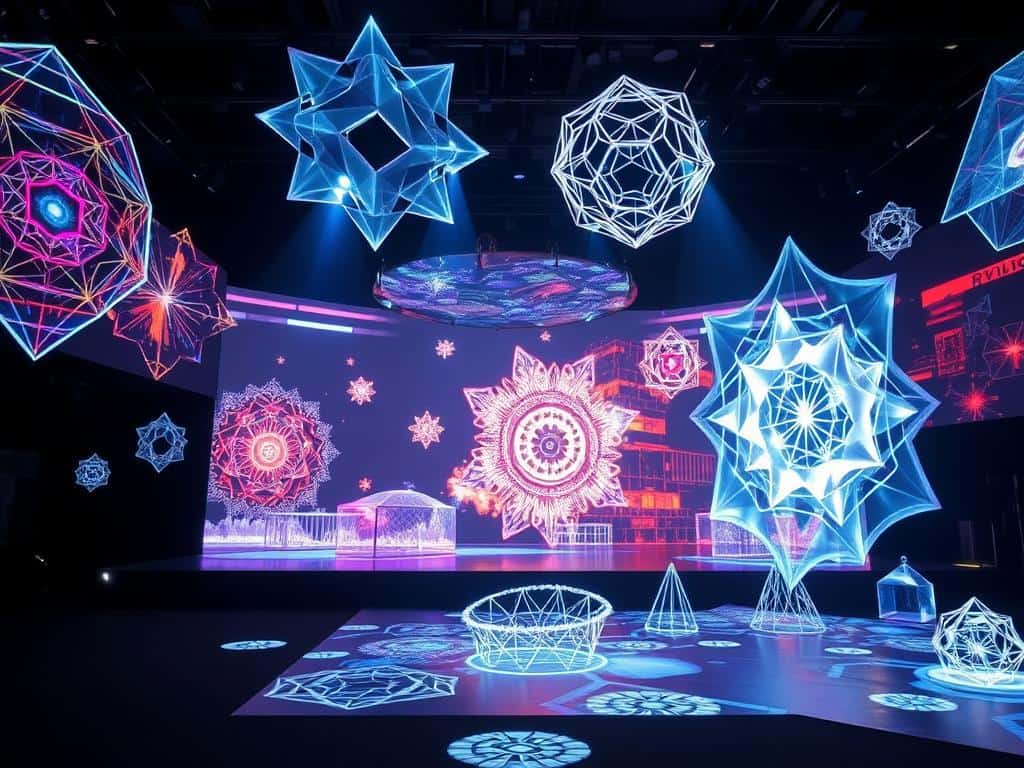
Exploring Budget-Friendly Alternatives like Projection Mapping
One promising solution is projection mapping, a cost-effective method for creating engaging 3D visuals. Unlike traditional holographic systems, projection mapping uses existing surfaces to display dynamic content. This approach reduces the need for expensive equipment, making it accessible to a broader audience.
For example, many artists and event planners are using projection mapping to create immersive experiences at a fraction of the cost. This technique is also gaining traction in retail, where brands use it to showcase products in innovative ways. It’s a practical solution that demonstrates the power of creativity in overcoming financial barriers.
Future Prospects for Affordable Holographic Systems
Looking ahead, ongoing research and industry partnerships are paving the way for more affordable holographic systems. Universities and tech companies are collaborating to develop scalable products that balance quality and affordability. These efforts are crucial for making this technology accessible to a wider audience.
In my view, the key to success lies in addressing the need for practical solutions. By focusing on cost-effective innovations and fostering collaboration, we can bring holographic systems into everyday life. The future is bright, and I’m excited to see how these advancements will transform the way we work and contact one another.
Conclusion
The evolution of communication is taking a groundbreaking turn, blending the digital and physical worlds seamlessly. Holography stands at the forefront of this transformation, offering immersive experiences that redefine how we connect. From healthcare to education, its applications are reshaping industries and enhancing interactions.
I’ve seen how this technology bridges distances, making virtual meetings feel as real as face-to-face conversations. Its ability to create lifelike displays is not just innovative—it’s revolutionary. As advancements continue, we’re moving toward a future where immersive content becomes a part of everyday life.
While challenges like cost and accessibility remain, the progress in holographic displays is undeniable. This tool is paving the way for a more connected and interactive world. I encourage everyone to stay informed and embrace these emerging systems as they shape the future of communication.

