Have you ever imagined controlling a device with just your thoughts? It sounds like something out of a sci-fi movie, but scientists are making it a reality. I’ve always been fascinated by how the brain works and how technology can tap into its potential. The idea of using our minds to interact with the world around us is both exciting and a little unsettling.
Early experiments on brain activity have paved the way for incredible advancements. From treating neurological disorders to controlling devices, the possibilities seem endless. Modern technology is now able to read and interpret electrical signals from the brain, opening doors to new ways of diagnosing and responding to mental conditions.
But is this innovation ready for everyday use? While the promise is undeniable, I can’t help but wonder about the risks and ethical concerns. As we dive deeper into this fascinating world of mind control, it’s important to balance excitement with caution.
Key Takeaways
- Mind-controlled gadgets are becoming a reality through advancements in brain research.
- Early experiments have enabled the treatment of neurological disorders and device control.
- Modern technology can read and interpret electrical activity from the brain.
- Ethical concerns and risks must be considered as this technology evolves.
- The potential for everyday use is promising but requires careful evaluation.
Innovations in Mind-Controlled Tech
The line between thought and action is blurring thanks to modern science. Brain-computer interfaces (BCIs) are at the forefront of this revolution, enabling direct communication between the brain and external devices. These systems map electrical activity in the brain to digital commands, creating a seamless connection between thought and technology.
The Science Behind Brain-Computer Interfaces
At the core of BCIs is the ability to decode complex patterns of brain activity. Scientists use tools like EEG and fMRI to read electrical signals and blood flow changes. For example, a study from the University of Texas at Austin utilized fMRI scans to measure activity during storytelling podcasts, showcasing how technology can interpret continuous language from the brain.
Research from Yonsei University and the Institute for Basic Science has advanced our understanding of neural circuits. Their Nano-MIND technology uses magnetized nanoparticles to target specific brain regions, demonstrating precise control over behaviors like feeding and nurturing. This breakthrough highlights the potential of non-invasive approaches in brain research.
Emerging Gadgets Revolutionizing Control
Emerging gadgets are leveraging these advancements to offer new forms of control. For instance, devices like Neuralink and Meta’s BCI projects aim to translate thoughts into words in real-time. These innovations are not just for patients with neurological disorders but also for healthy individuals seeking enhanced interaction with technology.
One example is the use of BCIs in prosthetics, where electrodes interpret brain signals to move artificial limbs. Another is the development of portable systems like fNIRS, which operate at a lower resolution than fMRI but are more accessible. These devices are transforming the way we interact with the world, making thought-based control a reality.
“The potential of BCIs is immense, but we must tread carefully to address ethical concerns and ensure privacy,” says a leading neuroscientist.
As we explore these innovations, it’s crucial to balance excitement with caution. The future of brain-driven technology is promising, but it requires careful evaluation to ensure it benefits everyone.
Decoding the Neurons: How Brain Activity Powers Gadgets
What if your brain could directly control the devices around you? This idea is no longer science fiction. Scientists are decoding the electrical activity of the brain to unlock its potential. By understanding how neurons communicate, we can harness this power to operate gadgets and treat disorders.
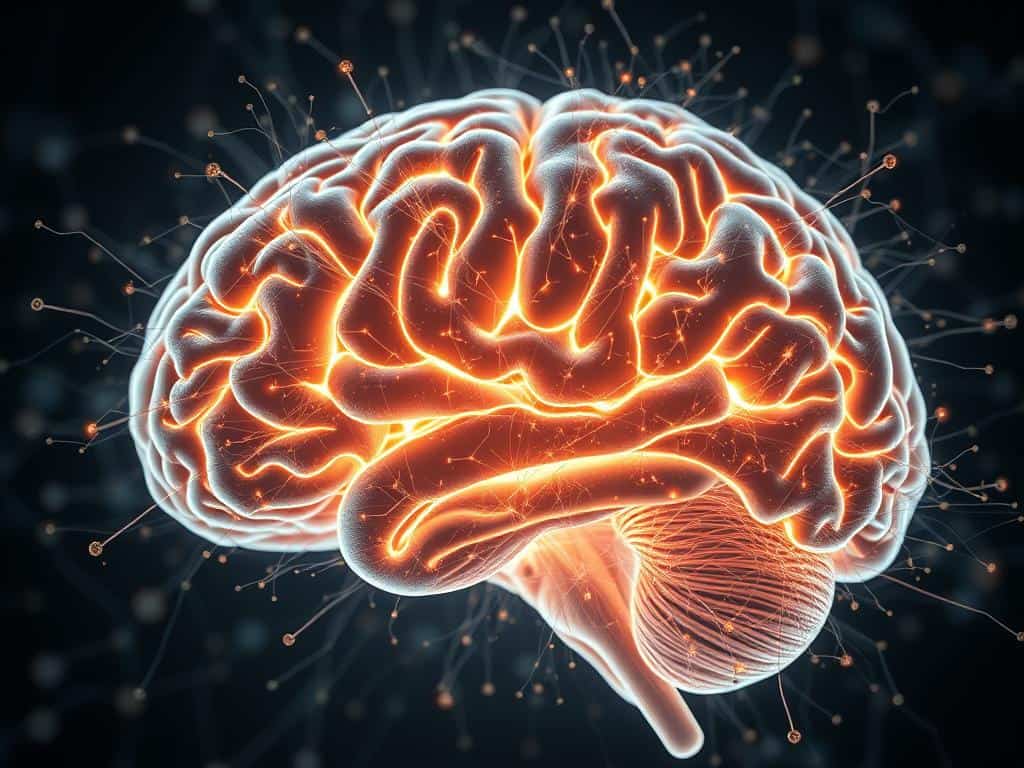
One of the key tools in this field is the EEG (electroencephalogram). It measures the brain’s electrical signals, helping researchers identify patterns linked to specific thoughts or actions. For example, a study from the University of Texas used EEG to map brain activity during storytelling, showing how technology can interpret complex language.
Understanding Electrical Activity and Brain Implants
Electrodes play a crucial role in measuring brain activity. Implanted directly into the brain, they provide precise data about neural signals. This method is particularly useful for treating disorders like epilepsy or Parkinson’s. By stimulating specific regions, implants can restore lost functions and improve quality of life.
Optogenetics is another groundbreaking approach. It uses light to control neurons, offering a non-invasive way to study brain activity. Research from Yonsei University has shown how this technique can target specific neural circuits, demonstrating its potential for precise control.
“The ability to decode brain signals opens up incredible possibilities, but it also raises important ethical questions,” says a leading neuroscientist.
Converting neural signals into computer-readable data is a complex process. It involves mapping electrical patterns to digital commands, enabling devices to respond to thoughts. However, challenges remain, such as accurately placing electrodes and avoiding unintended side effects.
As we continue to explore this field, the potential for brain-driven technology grows. From prosthetics to communication devices, the future is full of promise. But it’s essential to approach these advancements with caution, ensuring they benefit everyone.
Expert Insights and Future Implications
The intersection of neuroscience and technology is reshaping how we interact with the world. As a researcher, I’ve seen firsthand how advancements in brain studies are driving innovation. From university labs to industry projects, the potential for life-changing applications is immense.
Industry Research and University Findings
Recent studies from Carnegie Mellon and other institutions highlight the progress in brain stimulation therapies. For example, researchers have developed non-invasive techniques to target specific brain regions, offering hope for patients with chronic depression and Parkinson’s. These findings are not just academic; they’re being applied in real-world treatments.
One groundbreaking project involves using electrodes to map brain activity in real-time. This allows for precise control over devices, from prosthetics to communication tools. However, the ethical implications of such technology cannot be ignored. As one scientist noted, “We must ensure these advancements benefit everyone, not just a select few.”
Potential Benefits and Challenges
The benefits of brain-driven technology are clear. Improved treatments for neurological disorders, enhanced communication for those with disabilities, and even new ways to interact with machines are on the horizon. Yet, challenges remain, particularly around privacy and control.
For instance, who owns the information collected by brain implants? How do we prevent misuse of this technology? These are questions that researchers and policymakers must address as the field evolves.
My Reflections on Life-Changing Technology
As someone deeply involved in this field, I’m both excited and cautious about the future. The potential for brain-driven technology to improve lives is undeniable. However, we must proceed with care, ensuring that these advancements are safe, ethical, and accessible to all.
“The future of brain research is bright, but it’s our responsibility to guide it in the right direction,” says a leading neuroscientist.
Looking ahead, I believe we’re on the brink of a new era where thought and technology merge seamlessly. But this future must be built on a foundation of rigorous research and ethical considerations.
Conclusion
The future of brain-driven technology is closer than we think, blending innovation with ethical considerations. From brain implants to non-invasive techniques, these advancements are transforming how we treat disorders and interact with devices. For example, systems like Neuralink and portable EEG tools are making thought-based control a reality.
However, as a researcher, I believe we must balance excitement with caution. Ethical questions around privacy and control remain critical. Who owns the information collected by implants? How do we ensure these tools benefit everyone, not just a select few?
Continued research is essential to understand individual brain differences and improve device safety. While wireless control and magnetic modulation seem futuristic, they’re already making strides in labs. These breakthroughs could soon enhance function and quality of life for many.
Stay informed as brain-computer interfaces evolve. The journey from lab to everyday use is just beginning, and it’s a path worth watching closely.

