I remember the first time I saw a solar panel. It was bulky, expensive, and seemed like a distant dream for most households. Fast forward to today, and the story is entirely different. Solar technology has undergone a remarkable transformation, making it smarter, more efficient, and accessible than ever before.
Modern solar panels are no longer just about harnessing the sun’s power. They now integrate smart features and innovative materials that maximize efficiency and durability. This evolution marks a significant step in our transition to cleaner energy solutions.
What excites me most is how these advancements are reshaping the way we think about energy. From reducing harmful emissions to offering a reliable renewable energy source, solar technology is at the forefront of this change. It’s not just about powering homes; it’s about building a sustainable future.
Key Takeaways
- Modern solar panels are smarter and more efficient than ever.
- Innovative materials and smart features enhance their performance.
- Solar technology plays a key role in reducing harmful emissions.
- It’s a reliable renewable energy source for homes and businesses.
- The evolution of solar panels marks a significant step toward sustainability.
Understanding the Renewable Energy Landscape
The way we generate and consume power has changed dramatically over the decades. From early innovations to modern advancements, the journey toward cleaner solutions has been transformative. Today, the focus is on harnessing resources that can sustain our planet while meeting growing demands.
Defining Renewable Energy and Its Impact
Renewable energy refers to sources that naturally replenish, such as sunlight, wind, and water. Unlike fossil fuels, these resources produce minimal greenhouse gas emissions, making them vital in combating climate change. The International Energy Agency (IEA) highlights that transitioning to these sources could reduce global emissions by nearly half by 2030.
One of the most significant benefits is the reduction in air pollution. For instance, fossil fuel use contributes to 90% of carbon dioxide emissions, while renewables offer a cleaner alternative. This shift not only protects the environment but also improves public health and economic stability.
Historical Perspectives and Early Innovations
The history of energy use is marked by both progress and challenges. Early warnings about the dangers of combustion methods date back centuries, yet fossil fuels dominated due to their efficiency and availability. However, the 20th century saw a growing awareness of their environmental impact.
Innovations in renewable fuels began to emerge, laying the groundwork for today’s advancements. For example, the cost of solar-powered electricity has dropped by 85% since 2010, making it more accessible. Similarly, wind energy has become a reliable source, with costs decreasing by over 50% in the same period.
These historical developments highlight the importance of continuous innovation. As we reflect on our contemporary use of power, it’s clear that the transition to sustainable solutions is not just a choice but a necessity for future generations.
Advancements in Renewable Energy Tech
Artificial intelligence is playing a pivotal role in accelerating the development of smarter energy solutions. From optimizing power grids to enhancing the efficiency of solar panels, AI is transforming how we harness and manage resources. This integration of smart technologies is not just a trend; it’s a necessity for building a sustainable future.
Smart Technologies and AI Integration
Emerging technologies like smart sensors and AI are revolutionizing energy systems. These tools enable real-time monitoring and predictive analytics, ensuring optimal performance. For instance, AI can analyze vast amounts of data to identify inefficiencies and suggest improvements. This level of precision was unimaginable just a decade ago.
MIT’s work on machine learning and high-throughput experimentation is a prime example. Their research has accelerated the discovery of new materials for solar cells, reducing development time significantly. This approach not only boosts efficiency but also lowers costs, making sustainable solutions more accessible.
Breakthroughs in Solar Panel Efficiency
Innovative material science is at the heart of recent advancements in solar panel efficiency. Researchers are developing materials that maximize energy conversion rates while maintaining durability. For example, perovskite solar cells have shown efficiency improvements of up to 30%, outperforming traditional silicon-based cells.
Rigorous research is also focused on meeting cost and sustainability criteria. By streamlining the process from material discovery to market-ready solutions, AI is helping bridge the gap between innovation and implementation. These breakthroughs are vital for optimizing energy systems and driving the next wave of renewable innovations.
As we continue to explore the potential of these technologies, one thing is clear: the future of energy lies in the seamless integration of smart systems and cutting-edge research.
Harnessing Multiple Renewable Sources
The future of power lies in harnessing diverse sources to create a resilient grid. By combining solar, wind, and wave energy, we can ensure a stable and efficient system. This approach not only reduces reliance on fossil fuels but also enhances sustainability.
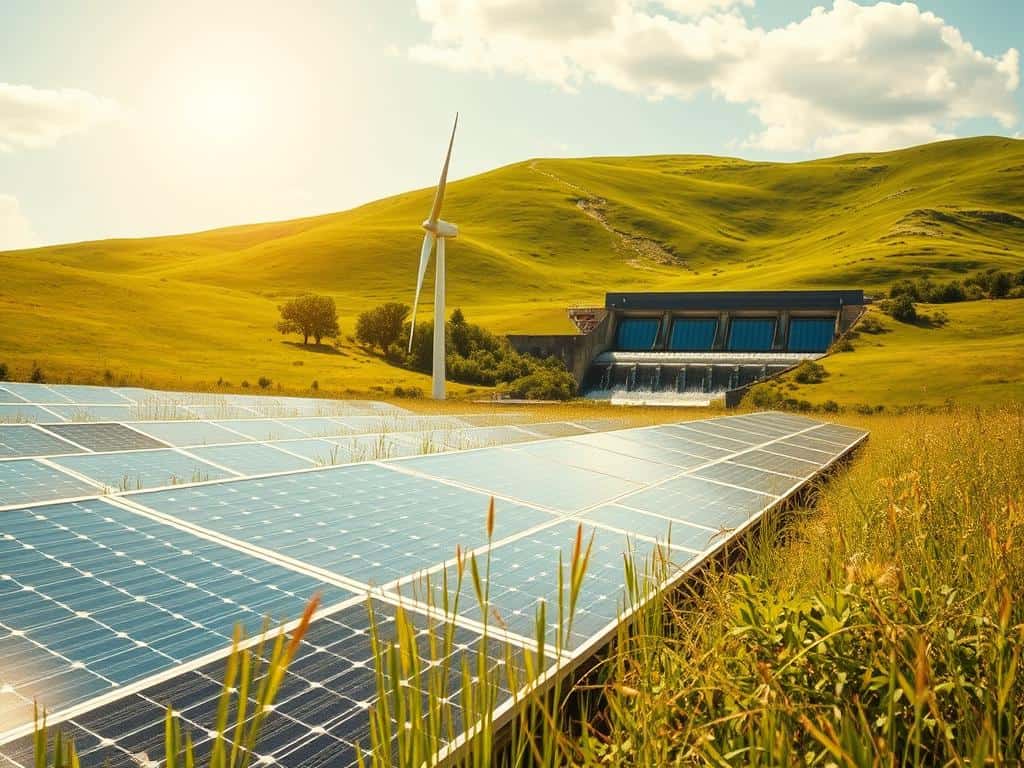
Solar, Wind, and Wave: Diversifying Energy Sources
Wind energy plays a crucial role in this mix. Wind turbines convert air currents into electricity, providing a clean and reliable source of power. Offshore wind projects are particularly promising, as they harness steady ocean breezes for consistent output.
Wave energy complements wind and solar by offering a nearly continuous power supply. Its predictable energy density makes it a valuable addition to the grid. Together, these sources create a balanced and resilient energy portfolio.
Exploring Geothermal, Hydro, and Bioenergy
Geothermal energy taps into the Earth’s natural heat, providing a stable and efficient power source. Hydroelectric systems, which generate electricity from flowing water, are another key component. Both are essential for reducing our carbon footprint.
Bioenergy, derived from organic materials, offers a sustainable alternative to fossil fuels. Whether through biomass boilers or biogas digesters, it helps manage waste while producing power. These sources are vital for a diversified energy strategy.
Offshore Wind and Marine Energy Developments
Offshore wind projects are gaining momentum, with innovations in turbine design and installation. Marine energy, including wave and tidal power, is also advancing. These technologies have the potential to provide significant power to coastal communities.
By integrating these diverse sources, we can build a sustainable and reliable energy future. The key lies in continuous innovation and collaboration across industries.
Optimizing Materials and Systems for Clean Energy
The evolution of materials and systems is reshaping how we approach clean power. By focusing on innovative designs and advanced science, we’re unlocking new possibilities for efficiency and sustainability. This progress is not just about improving performance; it’s about making clean power accessible and affordable for everyone.
Innovative Material Science for Improved Efficiency
One of the most exciting advancements is in material science. Researchers are developing new materials that maximize power generation while maintaining durability. For example, MIT’s Solar Thermal Aerogel Receiver uses aerogels to enhance heat retention, significantly boosting efficiency.
These innovations are not just theoretical. They’re being applied in real-world systems, reducing costs and improving reliability. By leveraging cutting-edge materials, we’re creating solutions that are both effective and sustainable.
Cost-Effectiveness and Sustainable Design
Cost remains a critical factor in the adoption of clean power. Fortunately, advancements in system design are making installations more affordable. For instance, NREL’s Hybrid Optimization and Performance Platform (HOPP) analyzes and optimizes hybrid plants, ensuring maximum efficiency at minimal cost.
This approach not only reduces expenses but also enhances the overall performance of the system. By focusing on cost-effective solutions, we’re making clean power a viable option for more people.
“The key to a sustainable future lies in the intersection of innovation and affordability.”
As we continue to develop these technologies, the focus remains on practical applications. From residential installations to large-scale projects, these advancements are transforming how we harness and manage resources.
Energy Storage Solutions and Future Challenges
Storing power efficiently has become a cornerstone of modern innovation. As we rely more on intermittent sources like solar and wind, robust storage systems are essential to ensure a steady supply. Without them, excess power generated during peak times goes to waste, undermining the benefits of clean sources.
One of the most exciting developments is MIT’s “sun in a box” initiative. This system captures excess heat and stores it in molten silicon, releasing it later to generate electricity. Such breakthroughs are setting new benchmarks for efficiency and reliability.
Innovations in Battery and Thermal Storage
Battery technology is advancing rapidly, with lithium-ion cells leading the way. Their high energy density and quick response times make them ideal for both small-scale and grid-level applications. However, researchers are also exploring alternatives like solid-state and flow batteries for longer-duration storage.
Thermal systems are another game-changer. By storing heat in materials like molten salt or silicon, these systems can provide power even when the sun isn’t shining. Innovations like these are crucial for balancing supply and demand on the grid.
Integrating Energy Systems for a Reliable Grid
Integrating advanced storage with existing systems is both a challenge and an opportunity. For instance, hydrogen and biofuel strategies offer alternative pathways for storing excess power. These methods not only reduce emissions but also enhance grid resilience.
Water-based systems, such as pumped hydro, are also gaining traction. By using water to store and release energy, these systems provide a cost-effective and scalable solution. Together, these technologies are paving the way for a more sustainable and reliable grid.
“The future of power lies in how we store and manage it effectively.”
As we continue to innovate, the focus remains on making storage solutions more affordable and accessible. From residential setups to large-scale projects, these advancements are transforming how we harness and manage resources.
Conclusion
Over the past decade, the shift toward cleaner solutions has transformed the industry. From smarter solar panels to innovative wind turbines, advancements are reshaping how we harness power. These developments mark a stark contrast to our historical reliance on fossil fuels.
Multiple sources, including wind, geothermal, and biomass, are now part of a diversified strategy. This approach not only reduces emissions but also ensures a stable and efficient grid. The past year has seen significant progress, with untapped potential in emerging technologies.
Transitioning from traditional fossil fuels to cleaner energy sources is no longer optional—it’s essential. Every innovation, from solar cells to wind farms, contributes to a broader vision of global sustainability. I’m committed to advocating for industry advancements that pave the way for a cleaner, more sustainable future.

