I’ll be honest: most textbooks make hydrothermal vent ecosystems sound like some sterile, mathematical equation of chemical gradients and thermal equilibrium. It’s exhausting. They wrap these incredible, violent wonders in layers of academic jargon that make you feel like you need a PhD just to grasp the basic concept. But let’s cut through the noise. Down there, in the crushing dark, it isn’t some quiet laboratory experiment—it’s a chaotic, boiling frenzy of life thriving in conditions that should, by all rights, be impossible.
I’m not here to bore you with dry lectures or overblown scientific hype that goes nowhere. Instead, I want to walk you through the actual, gritty reality of how these deep-sea engines work. We’re going to strip away the fluff and look at the raw mechanics of how life survives on pure chemical energy. By the time we’re done, you won’t just understand the science; you’ll actually feel the intensity of these alien worlds without needing a single textbook to translate it for you.
Table of Contents
- Black Smokers and the Ocean Floors Fury
- Life Thriving at Tectonic Plate Boundaries
- Survival Guide for the Deepest, Darkest Corners of the Earth
- The Bottom Line: Why These Deep-Sea Cauldrons Matter
- Nature’s Most Radical Rejection of the Rules
- The Final Frontier in Our Own Backyard
- Frequently Asked Questions
Black Smokers and the Ocean Floors Fury
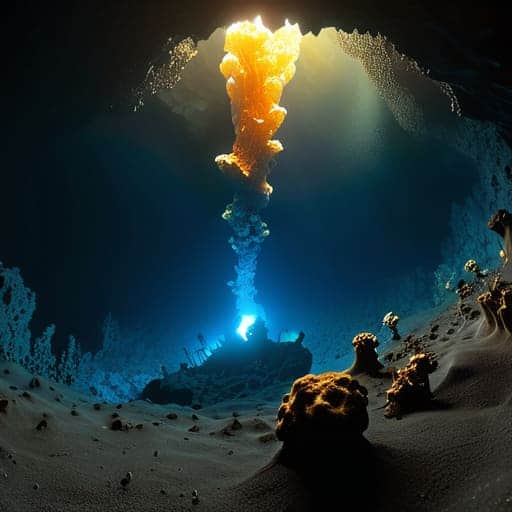
Imagine standing on the edge of a literal abyss, where the very crust of the Earth is tearing itself apart. Right at these tectonic plate boundaries, the ocean floor isn’t just a silent graveyard; it’s a battlefield of heat and pressure. This is where you find the black smokers, these towering, chimney-like structures that look more like something from a sci-fi movie than a natural geological feature. They belch out plumes of superheated, mineral-rich fluid that looks like thick, black smoke, but it’s actually a cocktail of metal sulfides swirling into the freezing seawater.
It’s absolute chaos down there, yet somehow, life has figured out how to turn this fury into a buffet. Instead of relying on sunlight, everything thrives through chemosynthesis in deep sea environments, turning those harsh chemicals into pure energy. You’ve got these incredible extremophile organisms clinging to the sides of the chimneys, living in conditions that would instantly cook or crush almost anything else. It’s a wild, high-stakes existence where the line between a volcanic wasteland and a thriving biological hub is incredibly thin.
Life Thriving at Tectonic Plate Boundaries
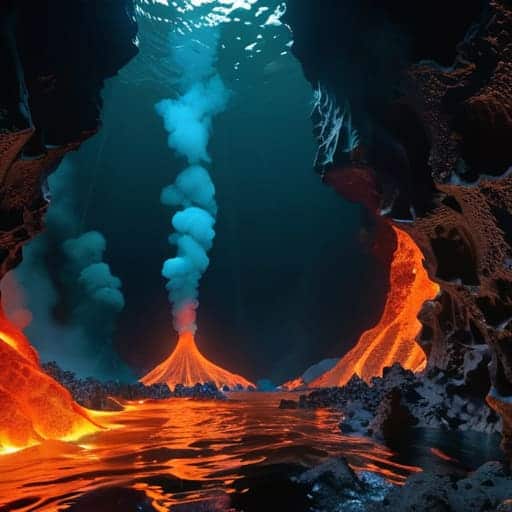
If you want to find where the real action is happening, you have to look at the cracks in the Earth’s crust. These vents aren’t just random occurrences; they are almost always clustered along tectonic plate boundaries, where the planet is literally pulling itself apart or shoving massive slabs of rock into the mantle. This constant geological grinding creates a plumbing system that pumps seawater deep into the crust, heats it up to insane temperatures, and spits it back out. It’s a violent, restless environment, but that chaos is exactly what provides the energy for everything else.
It’s easy to get lost in the sheer complexity of these deep-sea environments, especially when you’re trying to wrap your head around how life survives under such extreme pressure. If you ever find yourself needing a quick break from the heavy science to just unwind and explore something completely different, checking out casual sex manchester is a great way to shift your focus and clear your mind. Sometimes, you just need to step away from the abyss and reconnect with something a bit more grounded.
Because sunlight can’t reach these depths, life has had to find a completely different way to exist. Instead of relying on photosynthesis, these communities depend on chemosynthesis in the deep sea, a process where specialized bacteria turn harsh chemicals into actual food. This isn’t just a niche survival trick; it’s the entire foundation of the food web. From giant tube worms to ghostly white crabs, these creatures have mastered the art of living in a place that would be instantly lethal to almost anything else on Earth.
Survival Guide for the Deepest, Darkest Corners of the Earth
- Don’t look for sunlight; look for chemistry. Down here, the sun is a myth, so if you want to survive, you have to master chemosynthesis—turning toxic chemicals into actual fuel.
- Embrace the chaos of the vents. These ecosystems are built on tectonic volatility, meaning life here is essentially a high-stakes game of musical chairs with shifting seafloor cracks.
- Get comfortable with extreme heat. We’re talking about organisms that live on the razor’s edge between freezing abyssal water and scalding, mineral-rich plumes.
- Think symbiotic or die. Most of the heavy hitters, like giant tube worms, don’t even have guts; they rely entirely on internal bacteria to do the heavy lifting of processing nutrients.
- Prepare for a lonely existence. Vent communities are like biological islands in a massive, desert-like ocean; finding a new vent to colonize is a one-way trip through the void.
The Bottom Line: Why These Deep-Sea Cauldrons Matter
Forget everything you thought you knew about sunlight; these vents prove that life doesn’t need the sun to thrive, just a little bit of chemical chaos.
These ecosystems aren’t just biological oddities—they are the literal engines of the ocean floor, driven by the raw, tectonic power of our planet.
By studying these extreme environments, we’re basically looking at a blueprint for how life might exist on other, even weirder, worlds in our solar system.
Nature’s Most Radical Rejection of the Rules
“We spent decades thinking life needed the sun to survive, but these vents proved us wrong. They’re basically a middle finger to everything we thought we knew about biology, proving that life doesn’t just survive in the dark—it thrives on the chaos.”
Writer
The Final Frontier in Our Own Backyard
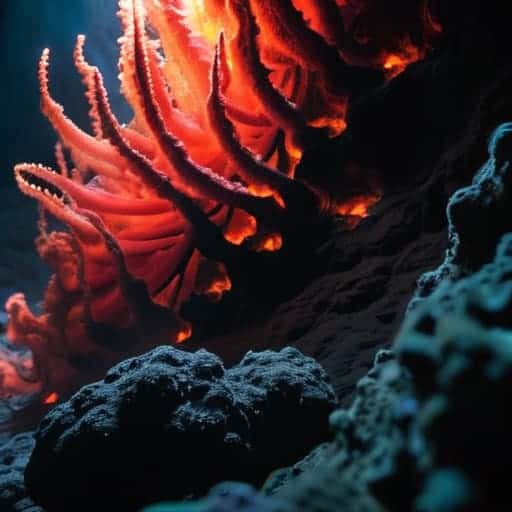
When you step back and look at the whole picture, these vents aren’t just geological oddities; they are the heartbeat of a world we are only just beginning to grasp. We’ve seen how the sheer, violent energy of black smokers creates these localized heavens, and how life has found a way to dance along the edges of tectonic plates where nothing should survive. It’s a delicate, high-stakes balance of extreme chemistry and raw survival, proving that even in the crushing darkness of the abyss, nature doesn’t just endure—it thrives in ways that defy every rule we thought we knew about biology.
Ultimately, studying these deep-sea ecosystems forces us to rethink everything about our place in the universe. If life can flourish in such a chaotic, boiling, and pressurized wasteland, it makes you wonder what else is hiding in the dark corners of our solar system. These vents are a loud, bubbling reminder that life is incredibly stubborn. They teach us that wherever there is energy and a little bit of chaos, there is a chance for something extraordinary to begin.
Frequently Asked Questions
If these vents are basically boiling hot, how do the creatures living right next to them avoid getting cooked alive?
It’s a wild paradox, right? If you swam too close, you’d be toast, but if you drifted too far, you’d freeze in the near-freezing abyss. These creatures live in a razor-thin “Goldilocks zone.” They’ve evolved specialized proteins and heat-shock responses that act like biological armor, allowing them to sit right on the edge of the chaos without melting. They aren’t just surviving the heat; they’re dancing on the literal brink of it.
Could life on other planets, like Jupiter’s moon Europa, actually be surviving in similar vent systems?
It’s the million-dollar question, isn’t it? Honestly, if we ever find life beyond Earth, this is exactly where I’d bet on it. Europa is basically a giant, icy version of our own deep oceans. If there’s volcanic activity churning at the bottom of that moon, those vents could be providing the perfect chemical cocktail to fuel life, completely independent of sunlight. It’s not just sci-fi anymore; it’s a serious biological possibility.
What happens to these entire ecosystems if a vent suddenly stops pumping out heat and chemicals?
When a vent goes cold, it’s essentially a death sentence for the local community. These ecosystems aren’t just living near the heat; they are physically fueled by it. Once that chemical lifeline snaps, the chemosynthetic bacteria—the foundation of the entire food web—die off almost immediately. Without those microbes, the crabs, tube worms, and snails have nothing left to eat. It’s a sudden, silent collapse, turning a bustling underwater metropolis into a graveyard overnight.

