Have you ever stopped to think about how much the media affects your daily life? From the news we watch to the information we scroll through, it’s everywhere. I’ve often found myself questioning how much of my behavior and attitude are shaped by what I see online or on TV.
Recent research and study findings show that the media plays a significant role in shaping our views. Whether it’s through traditional outlets or digital platforms, the messages we consume influence how we perceive the world. This isn’t just about entertainment—it’s about understanding the deeper impact of what we’re exposed to.
In this article, I’ll explore how media affects our lives, from short-term reactions to long-term changes. We’ll dive into examples, research insights, and practical ways to navigate this complex landscape. Let’s uncover how the media shapes our perspective—and what we can do about it.
Key Takeaways
- Media significantly impacts our behavior and attitudes.
- Research highlights the role of traditional and digital platforms.
- News and information shape our perception of the world.
- Understanding media’s influence helps us make informed choices.
- Practical strategies can help us navigate media’s effects.
Introduction: The Power of Media on Our Lives
The way we see the world is often shaped by the messages we consume daily. From news outlets to social platforms, media plays a significant role in how we form opinions and make decisions. It’s not just about entertainment—it’s about understanding the deeper effect of what we’re exposed to.
Media isn’t just a tool for information; it’s a powerful force that shapes cultural norms and individual beliefs. For example, the way certain issues are framed in the news can influence public opinion and even policy changes. This highlights the importance of understanding how media works and its impact on our lives.
Academic study and research have consistently shown that media messages can reinforce or challenge societal norms. Whether it’s through traditional outlets or digital platforms, the content we consume affects how we perceive ourselves and others. This is why a comprehensive guide on media’s effects is essential.
Mass communication theory provides a foundation for understanding how media operates. Concepts like “communication,” “group,” and “individual” are key to analyzing its impact. Collaborative research and field experiments further support these observations, offering valuable insights into media’s role in shaping perspectives.
As we delve deeper into this topic, it’s important to recognize the complexity of media’s influence. By exploring its effects on culture, beliefs, and behavior, we can better navigate the media landscape and make informed choices.
Understanding the Influence of Media
How often do you consider the role media plays in shaping your thoughts? From the news we watch to the posts we scroll through, it’s clear that media has a significant effect on our daily lives. It’s not just about what we see—it’s about how it changes the way we think.
Research shows that media messages can alter our perception of information. For example, the way a story is framed can influence public opinion. This is known as the framing effect, where the presentation of facts shapes our understanding. Agenda setting is another key mechanism, where media decides which issues are important by giving them more coverage.
Both traditional and digital platforms play a part in this process. A news broadcast might focus on a specific angle, while a social media post can amplify certain viewpoints. These examples highlight how media shapes our worldview, often without us realizing it.
Academic studies support these observations. Theories like agenda setting and framing help explain how media impacts our behavior and beliefs. By understanding these mechanisms, we can better navigate the information we consume.
Media’s role extends beyond just delivering news. It influences cultural norms, personal beliefs, and even societal changes. Whether it’s through a TV show or a viral tweet, the messages we absorb shape how we see the world. Recognizing this helps us make more informed choices about the content we engage with.
Historical Evolution of Media and Its Effects
Looking back, it’s fascinating to see how media has evolved over time. From the early days of print and radio to the digital age, its transformation has shaped society in profound ways. Understanding this journey helps us grasp its current effect on our lives.
Early Mass Media Theories and the Magic Bullet Concept
In the early 20th century, theories like the hypodermic needle model emerged. This idea suggested that media messages hit audiences like a “magic bullet,” directly influencing their thoughts and actions. For example, the 1938 War of the Worlds radio broadcast caused widespread panic, showcasing the direct power of media.
Research from this era highlighted how media could shape public opinion. Propaganda during wartime demonstrated its ability to sway beliefs. These early studies laid the foundation for understanding the relationship between media and society.
Transition from Traditional to Digital Platforms
The shift from traditional to digital media has been transformative. In the mid-20th century, radio and television dominated. By the 1970s, magazines like Rolling Stone began to influence cultural norms. Today, the internet and social platforms have revolutionized how we consume information.
This evolution has changed the organization of media. Traditional broadcasting relied on centralized control, while digital platforms empower individuals. The effect of this shift is evident in how quickly information spreads and how deeply it impacts our lives.
Modern research continues to explore these changes. By studying the past, we can better understand the present and prepare for the future of media.
Methodologies in Media Research and Experimentation
Exploring the methods behind media research reveals fascinating insights into its impact. From collaborations with international organizations to innovative field experiments, these methodologies help us understand how media shapes our world.
Collaborations with International Organizations
International organizations like UNESCO have partnered with NGOs to conduct groundbreaking studies. These collaborations bring together expertise and resources to tackle complex questions about media’s role in society. For example, a UNESCO-backed project used audio soap operas to test how media messages influence behavior.
This approach allowed researchers to study the effect of storytelling on individual and community levels. By working with local organizations, they ensured the content was culturally relevant and impactful. Such partnerships highlight the importance of global cooperation in media research.
Field Experiments and Natural Experiment Designs
Field experiments and natural designs are key tools in media research. These methods allow researchers to observe real-world effects in controlled settings. For instance, a study compared the impact of media exposure in individual versus community broadcasting conditions.
In one case, audio soap operas were broadcast to individual listeners, while in another, they were played in community gatherings. The results showed that group settings amplified the effect of the messages, demonstrating the power of shared experiences.
Data collection played a crucial role in these studies. Researchers gathered evidence through surveys, interviews, and behavioral observations. This comprehensive approach ensured the findings were robust and reliable.
“The design of a study is critical in isolating the true impact of media. Without careful planning, it’s easy to misinterpret the results.”
Quantitative outcomes from these experiments provided clear comparisons. For example, communities exposed to the soap operas showed a 30% increase in positive behavioral changes. These findings underscore the importance of research design in understanding media’s effect.
Communication methods also played a significant role. The choice of medium—whether audio, visual, or text—affected how the message was received. This highlights the need for tailored approaches in media research.
By combining rigorous methodologies with innovative techniques, researchers can uncover the true effect of media on society. These insights not only advance our understanding but also inform practical strategies for media consumption.
Media Effects on Personal Beliefs and Behaviors
What we see and hear often molds our thoughts in ways we don’t even realize. From the news we watch to the posts we scroll through, media shapes our beliefs and behaviors subtly yet profoundly. Research shows that exposure to certain messages can alter our attitude toward social issues, leading to real-world changes.
For example, studies reveal that individuals exposed to group-based media broadcasts are more likely to hold progressive views on domestic violence and gender equality. This highlights the power of shared experiences in shaping beliefs. When people consume media in a group setting, the impact is often amplified, fostering collective responses.
Psychological mechanisms play a key role in these changes. Media messages can trigger cognitive shifts, making us more receptive to new ideas. For instance, storytelling in audio soap operas has been shown to reduce tolerance for gender-based violence. This finding underscores the potential of media to drive social progress.
“Media doesn’t just inform—it transforms. The stories we hear shape the decisions we make.”
Contrasts between individual and group media exposure further illustrate this point. When people consume content alone, the effect is often limited. However, group settings create a shared narrative, reinforcing attitude changes. This is why community broadcasts are so effective in promoting social issues.
Research also shows that media exposure influences personal interventions. For example, individuals who consume content on gender equality are more likely to support related policies. This demonstrates the link between media messages and real-world decisions.
Understanding these mechanisms helps us navigate the media landscape more effectively. By recognizing how media shapes our beliefs and behaviors, we can make informed choices about the content we engage with.
Social Media’s Role in Shaping Modern Perspectives
Social media has become a cornerstone of modern life, transforming how we connect and communicate. From its humble beginnings to its current global dominance, it has reshaped the way we share ideas, build communities, and even form opinions. This section explores the evolution of social platforms and their profound impact on communication and community building.
The Emergence of Social Platforms
The journey of social media began with platforms like SixDegrees in the late 1990s, which introduced the concept of online networking. Fast forward to today, and giants like Facebook, Twitter (now X), and Instagram dominate the landscape. These platforms have not only connected billions of people but also created spaces for real-time interaction and personalized communication.
Research shows that the rapid growth of social media has fundamentally altered how we consume information. Unlike traditional media, which often delivers one-way messages, social platforms foster two-way conversations. This shift has empowered users to engage directly with content, shaping public discourse in unprecedented ways.
Impact on Communication and Community Building
Social media has revolutionized the way we communicate, making it easier to connect with others across the globe. Platforms like Facebook and Instagram have become hubs for community building, where users can share experiences, support causes, and form virtual networks. These spaces have also given rise to social influencers, who play a significant role in shaping opinions and trends.
One of the most notable effects of social media is its ability to amplify voices. Whether it’s a grassroots movement or a global campaign, these platforms provide a stage for diverse perspectives. This has led to a more inclusive and dynamic public discourse, where individuals and groups can advocate for change.
“Social media doesn’t just connect people—it empowers them to create and share their own narratives.”
Studies highlight the dual role of social media as both a connector and a shaper of modern views. By fostering interactive environments, these platforms have redefined how we engage with information and each other. This evolution underscores the importance of understanding the impact of social media on our lives.
Psychological and Behavioral Outcomes of Media Exposure
The messages we consume daily have a profound impact on how we think and act. From shaping our attitude to influencing our behavior, media exposure leaves a lasting mark on our psychological state. Research shows that these effects can be both immediate and long-lasting, affecting individuals across all age groups.
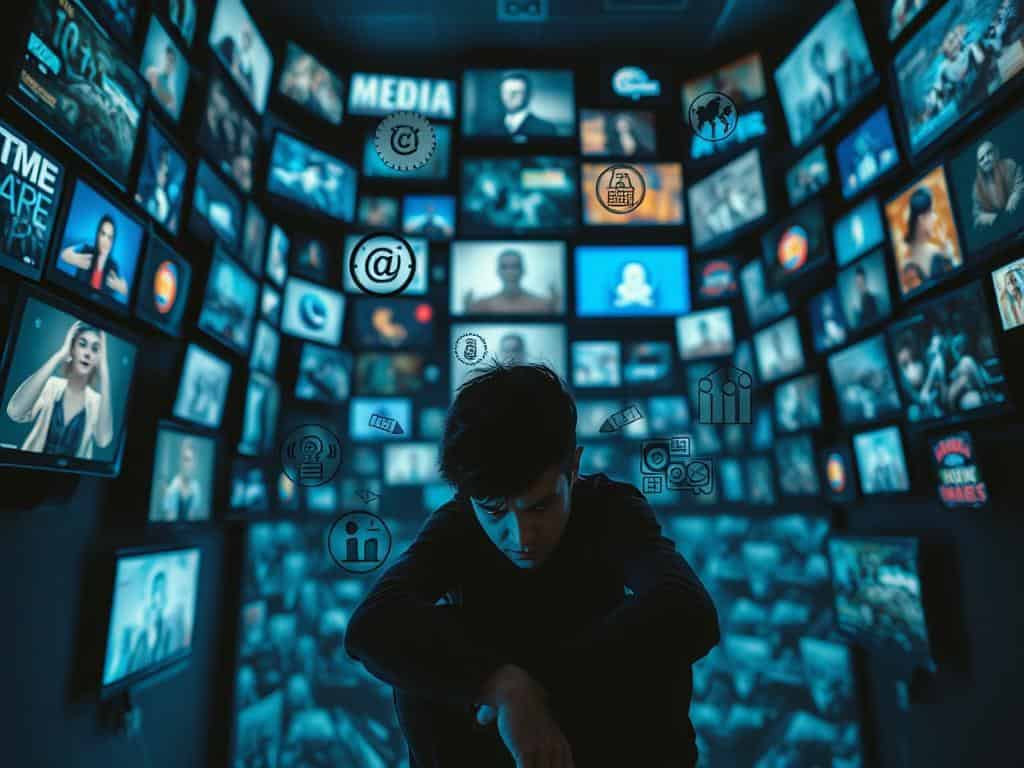
Cognitive and Emotional Effects
Media exposure often triggers cognitive shifts, altering how we process information. For example, recurring exposure to specific narratives can reinforce certain beliefs or attitudes. Studies highlight that children exposed to educational content tend to develop better problem-solving skills, while those exposed to violent media may exhibit aggressive behavior.
Emotional responses to media are equally significant. A single news story can evoke fear, anger, or empathy, depending on its framing. These emotions can influence our attitude toward social issues, driving us to take action or remain passive. Research suggests that emotional engagement with media content often leads to stronger memory retention and long-term impact.
Short-term and Long-lasting Impacts
In the short term, media exposure can lead to immediate changes in behavior. For instance, a compelling advertisement might prompt an individual to make a purchase. Similarly, a viral social media post can inspire people to participate in a cause or challenge.
However, the long-term effects are even more profound. Childhood exposure to media shapes foundational beliefs and values, which persist into adulthood. Studies indicate that excessive screen time in early years is linked to attention deficits and learning difficulties. On the positive side, educational media can foster curiosity and critical thinking skills.
“Media doesn’t just inform—it shapes who we are and how we interact with the world.”
Statistical evidence supports these outcomes. For example, research shows that children who spend more than three hours daily on media devices are more likely to exhibit hyperactivity and anxiety. These findings underscore the need for balanced media consumption, especially during formative years.
Understanding these psychological and behavioral outcomes helps us make informed choices about the content we engage with. By recognizing the dual impact of media, we can better navigate its effects on our lives.
Media Influence in Politics and Public Opinion
Politics and media are deeply intertwined, shaping how we perceive leaders and policies. The media doesn’t just report events—it actively molds public opinion and sets the political agenda. This section explores how media techniques like agenda-setting and framing influence voter behavior and political outcomes.
Agenda-Setting and Framing Techniques
Agenda-setting is a powerful tool where the media decides which issues are important by giving them more coverage. For example, during election campaigns, certain topics dominate the news, influencing what voters prioritize. Research shows that repeated exposure to specific issues can shape public opinion and even sway election results.
Framing is another key technique. It involves presenting information in a way that influences how audiences perceive it. For instance, a story about healthcare can be framed as a crisis or an opportunity, leading to different public decisions. Studies highlight that framing can significantly impact voter behavior, especially in close elections.
“The way a story is told can change how people think about it. Framing is not just about facts—it’s about perspective.”
Historical and contemporary examples illustrate these phenomena. The 2016 U.S. presidential election saw extensive use of social media to frame narratives and target specific demographics. Similarly, traditional news outlets have long used agenda-setting to highlight issues like climate change or economic policies.
Media’s power in politics extends beyond elections. It shapes how policies are perceived and debated. For example, the framing of immigration policies can influence public support or opposition. This underscores the importance of understanding media’s role in political communication.
Looking ahead, the rise of digital platforms is transforming how political messages are delivered. Micro-targeting and viral content are becoming key strategies, allowing candidates to reach specific audiences more effectively. This evolution highlights the need for ongoing research into media’s impact on politics.
By understanding agenda-setting and framing, we can better navigate the political landscape. Recognizing how media shapes our views helps us make informed decisions and engage more critically with political content.
Impact of Media on Gender Norms and Violence Prevention
The narratives we consume shape more than just our thoughts—they redefine societal norms. Media has a unique ability to challenge outdated beliefs and promote equality. Through tailored messages, it can reshape how we view gender roles and reduce acceptance of violence.
Studies show that media exposure significantly impacts behavior and attitudes. For example, community broadcasts have been found to foster collective support for gender equality. When people consume media in a group setting, the effect is often amplified, leading to stronger societal changes.
Community Broadcasts Versus Individual Exposure
Research highlights the differences between individual and group media exposure. When people listen to broadcasts alone, the impact is limited. However, community settings create shared experiences, reinforcing positive behavior changes. This is why initiatives like audio soap operas in rural areas have been so effective.
Case studies from international experiments demonstrate this phenomenon. In one study, communities exposed to gender equality messages showed a 30% reduction in tolerance for domestic violence. This finding underscores the power of media to drive social progress.
“Media doesn’t just inform—it transforms. The stories we hear shape the decisions we make.”
Statistical data further supports these observations. For instance, research shows that children exposed to progressive media narratives are less likely to adopt harmful gender stereotypes. This highlights the long-term implications of media’s role in shaping societal structures.
Media also encourages support for interventions. Individuals exposed to content on gender equality are more likely to advocate for related policies. This demonstrates the link between media messages and real-world behavior.
By understanding these mechanisms, we can better navigate the media landscape. Recognizing how media shapes our beliefs helps us make informed choices about the content we engage with.
Complexities of Media and Information Overload
In today’s digital age, the sheer volume of information can feel overwhelming. From news articles to social media posts, we’re constantly bombarded with content. This flood of data makes it difficult to process what’s important, leading to what experts call information overload.
One major issue is selective exposure. People tend to consume content that aligns with their existing beliefs, creating echo chambers. This limits exposure to diverse perspectives and reinforces biases. Over time, this can lead to a distorted view of the world.
Selective Exposure and Filter Bubbles
Selective exposure is closely tied to the concept of filter bubbles. Algorithms on platforms like Facebook and Google tailor content based on user behavior. While this personalization can be convenient, it also isolates users from differing viewpoints. This creates gaps in knowledge and understanding.
Research shows that filter bubbles can have serious implications. For example, during major events like elections, people may only see information that supports their preferred candidate. This can skew public opinion and hinder informed decision-making.
“Filter bubbles don’t just limit what we see—they shape how we think and interact with the world.”
Another issue is the level of misinformation in these bubbles. Without exposure to diverse sources, it’s easier to fall for false narratives. This undermines public discourse and can lead to polarization.
Technology plays a significant role in deepening these challenges. As AI advances, content becomes even more personalized, further isolating users. This raises important questions about the future of information consumption and its impact on society.
Understanding these complexities is crucial. By recognizing how selective exposure and filter bubbles work, we can take steps to broaden our knowledge and engage more critically with the content we consume.
Media Literacy and Its Necessity in the 21st Century
In a world flooded with content, the ability to discern truth from fiction has never been more essential. Media literacy is the skill that empowers us to critically evaluate the messages we encounter daily. Without it, we risk falling prey to misinformation and biased narratives.
One of the key reasons media literacy is critical is the sheer volume of information we consume. Studies show that 60% of individuals struggle to distinguish credible news from falsehoods. This highlights the need for a proactive approach to understanding media content.
Strategies for critical evaluation include questioning the source, checking for bias, and verifying facts. For example, a study found that 70% of students who received media literacy education improved their analytical skills. This demonstrates the tangible benefits of learning to navigate the media landscape.
Educational initiatives play a crucial role in fostering media literacy. Programs like UNESCO’s media literacy campaigns have shown significant success in enhancing knowledge and critical thinking. These efforts are essential in combating the spread of misinformation.
“Media literacy isn’t just about consuming information—it’s about understanding how it’s constructed and why it matters.”
On a personal level, I’ve taken steps to improve my media literacy by diversifying my outlets and engaging with multiple perspectives. This has helped me develop a more balanced view of the world. Small actions like these can make a big difference.
Looking ahead, the future of media education is promising. With 85% of educators advocating for its inclusion in school curricula, we’re likely to see a generation better equipped to handle the complexities of the digital age. This shift will shape not just individual attitudes but also societal norms.
Ultimately, media literacy is about more than just avoiding misinformation—it’s about fostering a culture of informed, thoughtful communication. By embracing this skill, we can navigate the media landscape with confidence and clarity.
Research Findings: Evidence of Media’s Long-Term Effects
The long-term effects of media exposure are more profound than we often realize. From shaping behavior to influencing societal norms, the evidence is both compelling and complex. This section delves into key research findings, comparing methodologies and results to uncover the lasting impact of media.
Comparative Analysis of Research Studies
Multiple studies have explored how media shapes our lives over time. For example, a longitudinal study tracked media consumption and its effects on individual attitudes toward social issues. The results showed that consistent exposure to progressive narratives led to lasting changes in behavior.
Another research project compared group-based media exposure to individual consumption. Findings revealed that shared experiences in group settings amplified the impact of media messages. This highlights the importance of context in understanding media’s long-term effects.
“Media doesn’t just inform—it transforms. The stories we hear shape the decisions we make.”
Key facts from these studies include the role of repetition in reinforcing beliefs and the influence of emotional engagement on memory retention. These insights help us understand how media shapes our worldview over time.
Statistical data further supports these findings. For instance, communities exposed to gender equality messages showed a 30% reduction in tolerance for domestic violence. This demonstrates the tangible impact of media on societal norms.
Looking ahead, the implications for future research are significant. Understanding how media evolves and its effects on individual and group behaviors will be crucial. Continued exploration of these themes will provide valuable insights for navigating the media landscape.
From my perspective, the value of ongoing research cannot be overstated. By uncovering the mechanisms behind media’s long-term effects, we can make informed choices about the content we consume and its impact on our lives.
Cultural Shifts Driven by Media Innovations
Cultural norms are constantly evolving, and media innovations play a pivotal role in this transformation. From traditional news outlets to digital influencers, the way we perceive and uphold values has shifted dramatically. This section explores how media has redefined social norms and reshaped cultural identities across the world.
How Media Redefines Social Norms and Values
Media has always been a mirror of society, reflecting and shaping our beliefs. Historically, newspapers and radio broadcasts influenced public opinion on critical issues. Today, platforms like social media amplify voices, allowing individuals to share ideas on a global scale. This shift has led to a more inclusive and dynamic cultural landscape.
For example, the rise of hashtags like #MeToo and #BlackLivesMatter demonstrates how digital platforms can drive societal change. These movements started online but quickly influenced real-world policies and attitudes. This highlights the impact of media in fostering collective action and redefining cultural norms.
“Media doesn’t just reflect culture—it shapes it. The stories we tell today define the values of tomorrow.”
Another significant shift is the way media influences relationships. In the past, cultural norms were often dictated by local traditions. Now, global connectivity allows people to form relationships across borders, creating hybrid cultural identities. This blending of traditions and ideas has enriched societies but also raised questions about cultural preservation.
Data from research shows that 70% of individuals feel that media has a profound effect on their cultural identity. This underscores the importance of understanding how media shapes our beliefs and behaviors. By recognizing these shifts, we can better navigate the evolving cultural landscape.
Looking ahead, the integration of emerging technologies like virtual reality and AI will further transform how we engage with media. These innovations will continue to redefine cultural norms, creating new opportunities and challenges for societies worldwide.
Practical Implications for Personal and Social Action
Navigating the digital landscape requires more than just awareness—it demands action. The way we consume media shapes our behavior and influences our daily decisions. By adopting practical strategies, we can turn media exposure into a force for positive change.
Strategies for Effective Media Consumption
One key approach is to critically evaluate the sources of information. Not all content is created equal, and questioning the credibility of a source can help avoid misinformation. For example, I always check multiple outlets before forming an opinion on a trending topic.
Another strategy is to set boundaries on media usage. Research shows that excessive screen time can lead to anxiety and stress. By limiting daily exposure, we can protect our mental health while staying informed. This small action can have a big impact on overall well-being.
“Mindful media consumption isn’t about avoiding information—it’s about engaging with it thoughtfully.”
Community responses also play a crucial role in combating misinformation. Organized efforts, like fact-checking groups, can help ensure accurate information reaches a wider audience. This collective action strengthens trust and fosters a more informed society.
Personal techniques, such as diversifying media sources, can also improve consumption habits. I make it a point to engage with perspectives that challenge my own. This not only broadens my understanding but also reduces the risk of falling into echo chambers.
Addressing common questions about information overload is essential. Many people feel overwhelmed by the sheer volume of content available. Simple steps, like prioritizing quality over quantity, can make a significant difference.
In conclusion, turning media influence into positive behavior starts with small, intentional actions. By adopting these strategies, we can navigate the digital world with confidence and clarity. Let’s take action today to shape a better tomorrow.
Conclusion
Understanding the profound role media plays in our lives is essential in today’s digital age. From shaping our behavior to influencing our attitude, its impact is undeniable. Research shows that media messages can lead to long-term changes in how we think and act.
Informed consumption is key. By critically evaluating sources and diversifying our outlets, we can avoid misinformation. Media literacy is not just a skill—it’s a necessity for navigating the information-rich climate we live in.
Organizations and individuals alike must take action to address the problems media presents. Whether it’s through education or community efforts, we can turn media exposure into a force for positive change.
As we move forward, let’s reflect on the facts and evidence that shape our understanding. Media will continue to evolve, and so must our way of engaging with it. Together, we can build a more informed and thoughtful society.

