Have you ever wondered how we’ll power our world sustainably in the years to come? I’ve spent countless hours exploring this question, and one thing is clear: energy storage is the cornerstone of a cleaner, greener future. As renewable sources like wind and solar grow, we need reliable ways to store and manage this power. That’s where innovative technologies come into play.
From lithium-ion batteries to emerging solutions like hydrogen storage, the options are diverse and exciting. These systems aren’t just about keeping the lights on—they’re about reshaping our power grid to meet the demands of a decarbonized world by 2035. It’s a challenge, but one that’s already seeing incredible progress.
Utility projects and industry investments are paving the way, showing us what’s possible. The future isn’t just about one technology—it’s about integrating a mix of systems to ensure stability and efficiency. Let’s dive into what this means for you and the world around us.
Key Takeaways
- Energy storage is essential for a decarbonized power sector by 2035.
- Diverse technologies like lithium-ion and hydrogen storage are key.
- Renewable energy growth relies on reliable storage solutions.
- Utility projects are leading the way in innovation.
- A mix of storage systems will shape the future power grid.
Introduction to Energy Storage and Its Importance in Today’s Energy Landscape
Balancing power supply and demand has never been more critical in the U.S. energy landscape. As renewable sources like solar and wind become more prevalent, the need for reliable storage solutions grows. These systems ensure that excess power generated during peak times can be saved for later use, creating a more stable and efficient grid.
Storage comes in various forms, including chemical, mechanical, and thermal. Chemical storage, like lithium-ion battery systems, is widely used for its efficiency and scalability. Mechanical options, such as pumped-storage hydropower, have been in use since 1929 and remain a cornerstone of grid stability. Thermal systems, which store heat in materials like molten salt, are also gaining traction.
Why does this matter? Storage acts as a buffer, allowing the grid to shift loads during peak periods. This ensures that homes and businesses have consistent access to electricity, even when renewable generation fluctuates. Innovations in this field are rapidly transforming the energy landscape, making storage a key player in the transition to a cleaner future.
Evolution of Energy Storage Technology: Past, Present, and Future
From ancient methods to cutting-edge innovations, the way we store power has evolved dramatically. Over the centuries, humanity has developed diverse systems to meet growing demands. Today, we stand at the brink of a new era, where technology is reshaping how we manage and utilize power.
Historical Milestones in Energy Storage
The journey began with simple yet effective solutions like pumped hydro, which has been in use since 1929. This mechanical system remains a cornerstone of grid stability. In the late 19th century, the invention of the rechargeable lead-acid battery marked a significant leap forward. By the 1990s, lithium-ion batteries revolutionized portable electronics and set the stage for modern advancements.
These milestones laid the foundation for today’s innovations. Each step brought us closer to a more efficient and reliable system. As renewable sources like solar and wind gained traction, the need for better storage solutions became evident.
Innovations Shaping the Future
Today, the focus is on long-duration storage and emerging technologies like hydrogen-based systems. These solutions aim to address the limitations of current methods, such as the finite lifespan of lithium-ion batteries. Projects like hybrid battery-hydrogen microgrids are paving the way for a more resilient grid.
“The future of power storage lies in integrating diverse technologies to meet the demands of a renewable-heavy grid.”
Investments in research and development are driving this evolution. From solid-state batteries to advanced thermal storage, the possibilities are endless. These innovations are not just about improving efficiency—they’re about creating a sustainable future for generations to come.
Energy Storage Tech: A Cornerstone for Renewable Integration
The shift toward renewable power sources is reshaping how we think about grid stability. Solar and wind are incredible resources, but their intermittent nature poses challenges. That’s where modern systems step in, ensuring we can rely on these sources day and night.
One of the most exciting developments is the combination of battery and hydrogen fuel cells. Projects like the PG&E microgrid demonstrate how these hybrid systems can provide consistent power. Batteries handle short-term needs, while hydrogen offers long-duration support. Together, they create a seamless flow of electricity.
These systems are more than just backups—they’re essential for modernizing the grid. By storing excess power during peak generation times, they ensure a steady supply when demand rises. This balance is critical as we transition to a cleaner future.
“Hybrid systems are the bridge between renewable potential and reliable power delivery.”
Current initiatives are focusing on integrating these technologies into existing infrastructure. The goal is to create a resilient grid that can handle surges in renewable generation. This approach not only improves stability but also reduces our reliance on fossil fuels.
Reliable storage systems are the backbone of this transition. They ensure that homes and businesses have uninterrupted access to electricity, even when the sun isn’t shining or the wind isn’t blowing. As these technologies evolve, they’ll play an even bigger role in shaping our energy future.
Key Energy Storage Technologies Explained
Exploring the range of technologies available reveals exciting possibilities. From advanced battery systems to innovative mechanical and thermal solutions, each method plays a vital role in managing power supply and demand. Let’s dive into the key options shaping the future.
Battery Energy Storage Systems
Lithium-ion battery banks are a cornerstone of modern solutions. They offer high efficiency and scalability, making them ideal for both small-scale and large-scale applications. These systems excel in addressing short-term demand spikes, ensuring a steady power supply during peak usage.
Flow batteries are another option, providing longer discharge durations. They’re particularly useful for stationary applications where consistent capacity is essential. These technologies are already being integrated into utility projects across the U.S., showcasing their reliability.
Mechanical and Thermal Storage Solutions
Mechanical methods like gravity-based systems and pumped hydro are gaining traction. These techniques store power by lifting heavy objects or pumping water to higher elevations. When demand rises, the stored potential energy is converted back into electricity, offering a sustainable solution.
Thermal systems, such as molten salt and ice-based storage, are also making waves. Molten salt retains heat for extended periods, while ice systems provide efficient cooling. These methods are particularly effective in addressing capacity challenges, ensuring power is available when needed most.
“The integration of diverse technologies is key to creating a resilient and efficient grid.”
Current projects are leveraging these innovations to provide reliable solutions. By combining battery, mechanical, and thermal systems, we’re building a more robust infrastructure capable of meeting the evolving needs of the state and beyond.
Lithium-ion Batteries: Advantages and Challenges
Lithium-ion batteries have become a cornerstone in modern systems for managing power supply. Their ability to store energy efficiently has made them a popular choice across industries. From electric vehicles to grid applications, these batteries are reshaping how we think about reliability and performance.
One of their standout features is their fast response time. This makes them ideal for addressing sudden spikes in demand. Additionally, their long service life ensures they remain operational for thousands of hours, making them a cost-effective solution in the long run.
Market Dominance and Longevity
Lithium-ion batteries dominate the market due to their versatility and efficiency. They are widely used in both small-scale and large-scale applications, from portable electronics to utility projects. Their ability to store energy for four to eight hours makes them a reliable choice for short-term needs.
Their longevity is another key advantage. With proper maintenance, these batteries can last for years, reducing the need for frequent replacements. This durability has contributed to their widespread adoption across various sectors.
Technical Limitations and Improvement Needs
Despite their advantages, lithium-ion batteries face challenges. One major limitation is their time capacity. While they excel in short-term applications, they struggle to meet the demands of longer-duration needs. Emerging alternatives are stepping in to fill this gap.
Technical improvements are also needed to enhance their performance. Issues like thermal management and material degradation require ongoing research. Overcoming these hurdles could unlock even greater potential for lithium-ion batteries.
“The future of lithium-ion batteries lies in addressing their limitations while building on their strengths.”
By focusing on innovation, we can ensure these batteries continue to play a vital role in modern systems. Their ability to store energy efficiently remains unmatched, but integrating them with emerging technologies will be key to shaping a sustainable future.
Emerging Alternatives: Zinc-Based and Iron-Air Battery Systems
As the demand for reliable power solutions grows, new alternatives are emerging to meet the challenge. Zinc-based and iron-air systems are leading the way, offering unique benefits that address the limitations of traditional lithium-ion cells. These innovations are not just theoretical—they’re already being tested in real-world projects across the country.
Zinc-Based Systems Overview
Zinc-based batteries are gaining attention for their safety and extended duration capabilities. Unlike lithium-ion cells, these systems use non-flammable aqueous solutions, making them a safer option for large-scale applications. Companies like Eos Energy are at the forefront, developing zinc-hybrid batteries that can store power for 3 to 12 hours, with potential for even longer durations.
One of the standout features of zinc-based systems is their low self-discharge rate. This makes them ideal for solar applications, where consistent performance is crucial. Eos Energy’s projects, backed by a $400 million loan from the Department of Energy, are paving the way for broader adoption in the U.S. market.
Benefits of Iron-Air Technology
Iron-air batteries are another exciting alternative, offering up to 100 hours of storage capacity. Developed by Form Energy, these systems are up to 10 times cheaper than lithium-ion cells and last significantly longer. Their ability to scale from small demonstration projects to large utility systems makes them a versatile solution for grid stability.
Pilot projects are already underway, with a 5 MW/500 MWh system expected to go online by 2026. These batteries are designed to handle long-duration needs, ensuring a steady power supply even during extended periods of low renewable generation.
“Iron-air technology is a game-changer, offering cost-effective and long-lasting solutions for the modern grid.”
These emerging alternatives are not just about improving efficiency—they’re about creating a more resilient and sustainable future. By integrating zinc-based and iron-air systems, we can address the challenges of today while preparing for the demands of tomorrow.
Hydrogen Storage Solutions: Fuel Cells and Hybrid Approaches
Hydrogen is emerging as a game-changer in the quest for sustainable power solutions. Its ability to store and deliver power efficiently makes it a key player in modern systems. From fuel cells to hybrid approaches, hydrogen is reshaping how we think about duration and reliability.
Green Hydrogen Production Methods
Green hydrogen is produced using renewable sources like wind and solar, combined with electrolyzers. This process splits water into hydrogen and oxygen, creating a clean fuel source. The U.S. Department of Energy (DOE) is backing initiatives to scale this technology, aiming to reduce production costs by 30% by 2030.
Projects like PG&E’s hybrid battery-hydrogen microgrid showcase the potential of this approach. By integrating battery energy storage with hydrogen systems, we can achieve both short-term and long-term duration needs. This ensures a steady power supply even during periods of low renewable generation.
Implementing Hybrid Storage Systems
Hybrid systems combine the strengths of fuel cells and battery energy storage to enhance grid resiliency. Batteries handle immediate demand spikes, while hydrogen provides long-term duration support. This dual approach ensures a seamless flow of electricity, even during extended outages.
DOE funding and policy incentives are driving the adoption of these systems. For example, a 5 MW/500 MWh hydrogen project is set to go online by 2026, offering seasonal coverage. These initiatives highlight the potential of hydrogen as a cornerstone for future power systems in the U.S.
“Hydrogen’s versatility and scalability make it a vital component of the modern grid.”
As we transition to a cleaner future, hydrogen’s role will only grow. Its ability to store power for extended durations, combined with renewable production methods, positions it as a key solution for sustainable power management.
Mechanical Energy Storage: Gravity and Pumped Hydro Technologies
Gravity and pumped hydro technologies are shaping the future of reliable power solutions. These mechanical systems use simple yet effective methods to store and release power, ensuring grid stability during peak demand. Unlike chemical solutions, they rely on physical principles like lifting heavy blocks or pumping water to higher elevations.
Advances in Gravity Energy Storage
One of the most exciting innovations is gravity-based systems. Companies like Energy Vault are leading the way with projects that use heavy composite blocks. These blocks are lifted during periods of low demand and lowered to generate power when needed. This form of storage is highly scalable and can last up to 50 years, far exceeding the lifespan of traditional battery energy systems.
For example, Energy Vault’s project in Snyder, Texas, demonstrates the practical application of this technology. By leveraging mechanical lifting, it provides a flexible solution for balancing grid supply and demand. This approach is not only efficient but also environmentally friendly, as it avoids the use of hazardous materials.
Pumped Hydro: A Proven Solution
Pumped hydro has been a cornerstone of mechanical systems since 1929. It works by pumping water to an elevated reservoir during off-peak hours and releasing it to generate power during high demand. This method accounts for over 90% of global high-capacity storage, showcasing its reliability and effectiveness.
“Mechanical systems like gravity and pumped hydro offer a sustainable and long-lasting alternative to chemical storage.”
Compared to battery energy solutions, mechanical systems excel in scalability and longevity. While batteries degrade over time, gravity and pumped hydro systems can operate for decades with minimal maintenance. This makes them a cost-effective choice for large-scale applications.
Innovative projects are driving the adoption of these technologies. From Energy Vault’s gravity systems to advanced pumped hydro facilities, mechanical storage is proving to be a key player in the transition to a cleaner future. By integrating these solutions, we can create a more resilient and efficient grid.
Thermal Energy Storage: Molten Salt, Ice, and Beyond
Thermal solutions are reshaping how we manage heat and cold in modern systems. By storing excess heat or cold, these systems help balance supply and demand, ensuring a stable grid. From molten salt to ice-based methods, thermal storage is proving to be a versatile and efficient option.
Benefits and Applications of Thermal Storage
Thermal systems work by storing heat or cold in a material like molten salt or ice. Molten salt, for example, retains heat for hours, making it ideal for solar thermal applications. Ice storage, on the other hand, reduces peak cooling demand in buildings, easing the strain on the grid.
One of the key advantages is their ability to address fluctuations in supply. Unlike traditional battery systems, thermal solutions can store energy for longer durations. This makes them particularly useful in scenarios where consistent power is essential.
These systems are also highly scalable. They can be applied across a wide range of settings, from residential homes to large utility projects. For instance, molten salt is used in solar power plants, while ice storage is popular in commercial buildings.
“Thermal storage bridges the gap between renewable generation and consistent power delivery.”
When compared to battery systems, thermal solutions often require less material and offer higher efficiency. They also have a longer lifespan, reducing the need for frequent replacements. This makes them a cost-effective choice for long-term applications.
In my view, thermal storage is uniquely positioned to meet specific supply challenges. As we transition to a cleaner grid, these systems will play a crucial role in ensuring reliability and stability. Their ability to store and release energy on demand makes them an essential part of the modern power landscape.
Smart Energy Management: Software-Driven Storage Solutions
Advanced software is transforming how we manage and optimize power systems. In the coming year, smart solutions will play a critical role in ensuring grid stability and efficiency. These systems rely on real-time monitoring and control to balance supply and demand dynamically.
Role of Monitoring and Control Systems
Monitoring systems track power usage in sub-second intervals, providing valuable insights. This data helps operators make informed decisions during peak periods. By integrating grid information, these systems can adjust power flows to meet demand without overloading the network.
One standout solution is Sparkion’s AI-driven software. It optimizes charging schedules and reduces operational costs. For example, charging during off-peak hours can lower expenses significantly. This approach also supports grid programs like demand response, which monetizes renewable power.
“Smart management systems are the backbone of a resilient and efficient grid.”
Case studies show how these systems have reduced costs over a defined period. In one project, Sparkion’s software cut demand charges by 30%. This highlights the potential for smart solutions to revolutionize the market in the coming year.
Looking ahead, the integration of AI and machine learning will further enhance these systems. Predictive analytics can forecast energy needs, ensuring optimal performance. As these technologies evolve, they’ll play a bigger role in shaping the future of power management.
Integrating Storage with the U.S. Grid: Innovations and Regulations
The integration of advanced systems into the U.S. grid is reshaping how we manage power supply and demand. Regulatory support is paving the way for these innovations, ensuring a smoother transition to a cleaner future. From hybrid systems to lithium-ion solutions, the market is evolving rapidly.
Utility Regulations and Grid Modernization
Modernizing the grid comes with its challenges. Traditional infrastructures were not designed to handle the fluctuating nature of renewable sources. However, regulatory bodies like the California Public Utilities Commission are leading the charge. Recent approvals for hybrid systems are a prime example of this progress.
One of the key challenges is balancing reliability with innovation. Lithium-ion batteries, for instance, offer high efficiency but require careful integration. Policies like the Inflation Reduction Act are providing the necessary funding to address these issues. This ensures that utilities can adopt advanced solutions without compromising grid stability.
“Regulatory support is the backbone of grid modernization, enabling utilities to adopt cutting-edge technologies.”
Utility projects are also setting benchmarks for the market. For example, PG&E’s hybrid battery-hydrogen microgrid demonstrates how diverse technologies can work together. These initiatives highlight the importance of collaboration between regulators, utilities, and technology providers.
Looking ahead, evolving regulations will continue to shape the market. As more utilities embrace advanced systems, the grid will become more resilient and efficient. This not only benefits consumers but also accelerates the transition to a sustainable future.
Case Studies: Pioneering U.S. Energy Storage Projects
Across the U.S., innovative projects are setting new standards for how we manage power. These initiatives are not just experiments—they’re real-world solutions shaping the future of the sector. From hybrid systems to advanced battery technologies, these projects highlight the critical need for reliable and resilient power solutions.
PG&E’s Hybrid Battery-Hydrogen Microgrid
One standout example is PG&E’s hybrid battery-hydrogen microgrid. This project combines the strengths of lithium-ion batteries and hydrogen fuel cells to address both short-term and long-term power needs. Batteries handle immediate demand spikes, while hydrogen provides extended support during periods of low renewable generation.
The microgrid has achieved significant milestones, including seamless integration into the existing grid infrastructure. It’s a prime example of how diverse technologies can work together to enhance grid stability. This initiative also underscores the importance of regulatory support in driving innovation.
“PG&E’s microgrid is a blueprint for how hybrid systems can meet the demands of a renewable-heavy grid.”
Dominion Energy’s Pilot Projects
Dominion Energy is also leading the charge with its pilot projects involving iron-air and zinc-based batteries. These systems offer unique benefits, such as extended duration and cost-effectiveness. For instance, iron-air batteries can store power for up to 100 hours, making them ideal for long-term applications.
These projects are not just about improving efficiency—they’re about creating a more sustainable future. By addressing the limitations of traditional systems, Dominion Energy is paving the way for broader adoption in the sector.
Both PG&E and Dominion Energy’s initiatives highlight the critical need for innovative solutions in the power sector. They demonstrate how hybrid systems and emerging technologies can meet the demands of a modern grid. As these projects continue to evolve, they’ll play a key role in shaping the future of power management in the U.S.
Environmental and Economic Impact of Modern Storage Systems
The environmental and economic benefits of advanced systems are becoming increasingly clear. As we transition to a cleaner future, these systems play a vital role in reducing emissions and enhancing grid stability. They are not just a part of the solution—they are the foundation of a sustainable future.
Sustainability and Supply Chain Considerations
Modern systems significantly reduce reliance on fossil fuels, lowering carbon footprints. For example, integrating renewable-based solutions has cut emissions by up to 30% in some regions. This shift is a critical part of achieving global climate goals.
However, supply chain robustness remains a challenge. Sourcing materials like lithium and cobalt for energy storage technology can be complex. Ensuring ethical and sustainable practices is essential for long-term success.
From an economic perspective, these systems offer substantial benefits. They reduce operational costs and create new job opportunities in manufacturing and maintenance. For instance, the U.S. market for these solutions is projected to grow to $8.2 billion by 2025.
“The integration of advanced systems is not just about efficiency—it’s about creating a sustainable and resilient future.”
Comparing traditional fossil fuel systems with renewable-based solutions highlights the economic advantages. While fossil fuels require ongoing fuel costs, renewable systems rely on free resources like sunlight and wind. This shift not only saves money but also ensures long-term energy security.
In my view, the future of these systems lies in their ability to balance environmental and economic needs. By addressing supply chain challenges and scaling innovative solutions, we can create a cleaner, more efficient world. The potential for reducing carbon footprints and driving economic growth is immense.
Policy, Incentives, and the Future of Energy Storage Tech
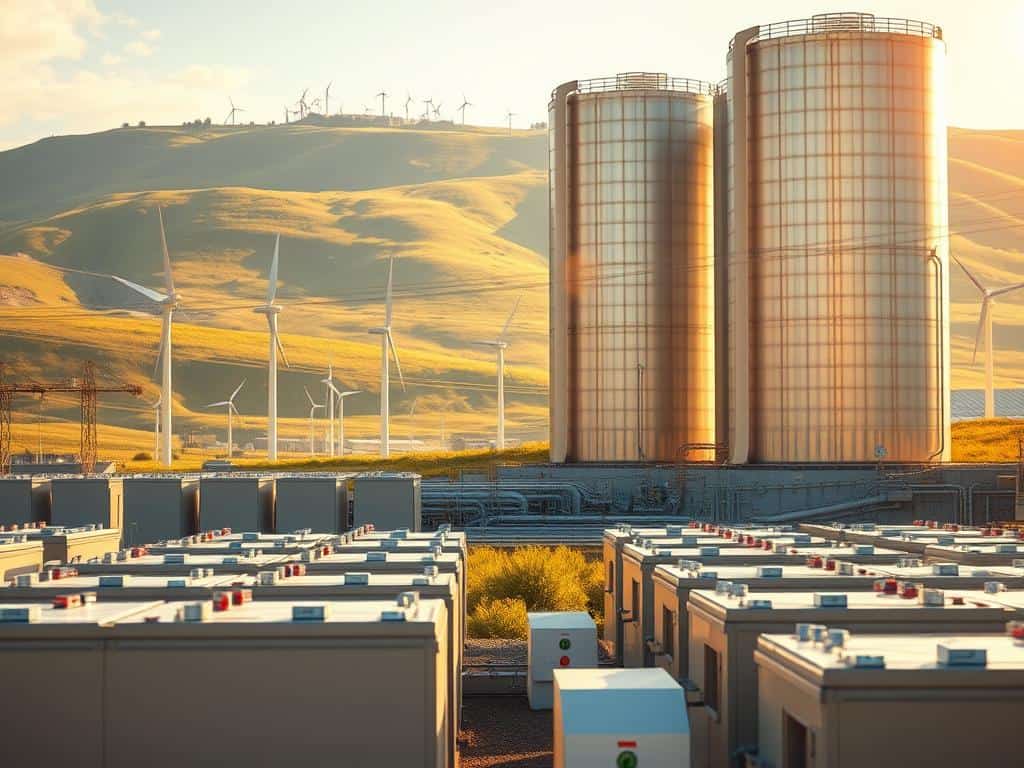
Policy measures and incentives are shaping the future of renewable energy storage solutions. The Inflation Reduction Act (IRA) is a game-changer, providing significant funding opportunities for innovative projects. This legislation is driving investments in emerging technologies, ensuring a cleaner and more resilient grid.
Impact of the Inflation Reduction Act
The IRA has unlocked billions in funding for storage technology projects. It includes tax credits and grants that make it easier for companies to adopt advanced systems. For example, the Act supports hybrid systems combining batteries and fuel cell technologies, enhancing grid stability.
These incentives are not just about reducing costs—they’re about accelerating innovation. By lowering financial barriers, the IRA is fostering a competitive market for long-duration storage solutions. This is critical for integrating more renewable sources into the grid.
Regulatory Support and Funding Opportunities
Regulatory bodies are also playing a key role in modernizing the grid. States like California and New York have adopted policies that encourage the deployment of advanced storage systems. These measures include procurement targets and financial incentives for utilities.
“Regulatory support is essential for scaling innovative solutions and ensuring grid reliability.”
Funding opportunities are expanding, with federal and state programs backing pilot projects. For instance, the Department of Energy is investing in research to improve the efficiency and affordability of storage technologies. These efforts are paving the way for a sustainable future.
Looking ahead, the combination of policy support and funding will continue to drive growth in the renewable energy sector. By addressing challenges like supply chain robustness and scalability, we can create a more resilient and efficient grid for generations to come.
Conclusion
The future of power management in the U.S. is being shaped by a mix of innovative solutions. From lithium-ion batteries to wind-integrated systems and thermal storage, these technologies are redefining how we meet modern electricity demands. Each solution plays a vital role in ensuring grid stability and supporting renewable integration.
Regulatory support and market shifts are driving these advancements. Policies like the Inflation Reduction Act are fueling investments, while utility projects are setting new benchmarks. Together, they’re creating a more resilient and efficient grid.
As we move forward, the need for advanced, diverse storage solutions will only grow. By embracing these technologies, we can build a sustainable future that meets the nation’s power needs while reducing environmental impact.

