Think about the last time you upgraded your phone or replaced an old device. It probably felt exciting to have something new, but what happened to the old one? For many of us, it ends up in a drawer or, worse, in the trash. This small act is part of a much larger problem that’s growing every year.
Globally, we’re producing an alarming amount of outdated electronics. These discarded items pile up, creating environmental hazards that affect our air, soil, and even water. The problem is urgent, but there’s hope. Innovative methods are emerging to tackle this crisis head-on.
In this article, we’ll explore five groundbreaking approaches that are changing the way we handle outdated electronics. These methods not only protect our planet but also pave the way for a more sustainable future. Let’s dive in and discover how we can turn this challenge into an opportunity.
Key Takeaways
- Outdated electronics are a growing global crisis.
- Innovative methods are emerging to manage discarded devices.
- These approaches protect the environment and public health.
- New technologies are making recycling more efficient.
- Sustainable practices can turn waste into valuable resources.
Introduction: Unpacking the E-Waste Crisis
A broken laptop left me wondering where all our old gadgets end up. I had no idea that my drawer full of outdated devices was part of a much bigger problem. It wasn’t just clutter—it was a ticking time bomb for the environment.
Technology evolves faster than ever. Every year, billions of devices are replaced, often due to planned obsolescence. This cycle creates mountains of discarded electronics. According to recent data, over 53 million tons of these items were generated globally in 2019 alone. That’s enough to fill 350,000 garbage trucks.
What shocked me most was learning about the hidden dangers. Old electronics contain toxic chemicals like lead, mercury, and cadmium. When improperly disposed of, these substances seep into the soil and water, contaminating ecosystems and posing serious health risks. It’s a silent crisis that affects every aspect of life.
This article will unpack the real-world implications of this issue. From the rapid pace of technology to the environmental hazards, we’ll explore how we can turn this challenge into an opportunity. The time to act is now.
The Global Scale and Environmental Impact of E-Waste
Every year, the world produces enough discarded electronics to fill thousands of garbage trucks. This isn’t just a minor inconvenience—it’s a full-blown crisis. The numbers are staggering, and they’re only getting worse. In 2022 alone, an estimated 62 million tons of outdated devices were generated globally. That’s equivalent to the weight of 9,000 Statues of Liberty.
What’s even more alarming is how little of this waste is properly managed. Only 22.3% of these discarded products were formally collected and recycled. The rest? They end up in landfills, incinerators, or informal recycling sites, where they release harmful substances into the environment.
Toxic Chemicals and Health Hazards
Discarded electronics are more than just clutter—they’re a ticking time bomb. These products contain toxic chemicals like lead, mercury, and cadmium. When improperly disposed of, these substances seep into the soil and water, contaminating ecosystems and posing serious health risks.
Children and pregnant women are particularly vulnerable. Exposure to these hazardous materials can lead to neurodevelopmental issues, respiratory problems, and even premature birth. The World Health Organization has flagged this as a critical issue, urging immediate action to protect public health.
Eye-Opening Global Statistics
The scale of this problem is hard to grasp, but the numbers paint a grim picture. By 2030, experts predict that global e-waste generation will exceed 74 million tons. That’s a 50% increase from 2019 levels. Even more concerning is the fact that 80% to 85% of this waste is not formally collected or properly managed.
“The global value of valuable materials in electronic devices, such as iron, copper, and gold, is approximately US$57 billion. Yet, only US$10 billion of these materials is recovered in an environmentally sound manner.”
This isn’t just an environmental issue—it’s a missed opportunity. Companies can recover over 100 times more gold from one ton of mobile phones than from traditional mining. The time to act is today. Small changes in how we handle discarded products can yield significant benefits for both the planet and our health.
Innovations in E-Waste Recycling Technologies
The way we handle old gadgets is changing, thanks to cutting-edge technologies. These advancements are not just improving efficiency—they’re turning discarded electronics into valuable resources. From advanced sorting to innovative separation techniques, the recycling industry is undergoing a transformation.
Advanced Sorting and Mechanical Shredding
One of the most significant breakthroughs is in advanced sorting. This process uses AI and robotics to identify and separate different types of material. For example, automated systems can distinguish between plastic, metal, and glass components with incredible accuracy. This reduces contamination and ensures that each material is processed correctly.
Mechanical shredding is another critical step. Old devices are broken down into smaller pieces, making it easier to extract valuable components. This method is particularly effective for recovering metals like gold, silver, and copper. Companies like Apple and Dell are already using these technologies to improve their recycling e-waste efforts.
Separation Techniques and Material Recovery
Once the devices are shredded, innovative separation techniques come into play. These methods isolate valuable material while safely removing toxins. For instance, hydrometallurgy uses chemical solutions to extract metals with high purity levels. This process is not only efficient but also environmentally friendly.
Another example is bioleaching, which uses microorganisms to recover metals like gold and copper. This technique is gaining traction because it operates at lower temperatures and reduces energy consumption. By embracing these methods, we can recover up to 95% of valuable material from discarded electronics.
“The global value of raw materials in electronic devices is approximately US$57 billion. Yet, only a fraction of this is recovered in an environmentally sound manner.”
These innovations are not just about efficiency—they’re about creating a sustainable future. By adopting these technologies, we can reduce the environmental impact of global e-waste and turn harmful waste into valuable resources. The time to act is now.
Implementing E-Waste Solutions for a Sustainable Future
When I first learned about the scale of discarded electronics, I was stunned by the sheer volume. It’s not just about the clutter in our homes—it’s about the impact on our world. Thankfully, innovative partnerships and practical approaches are making a difference.
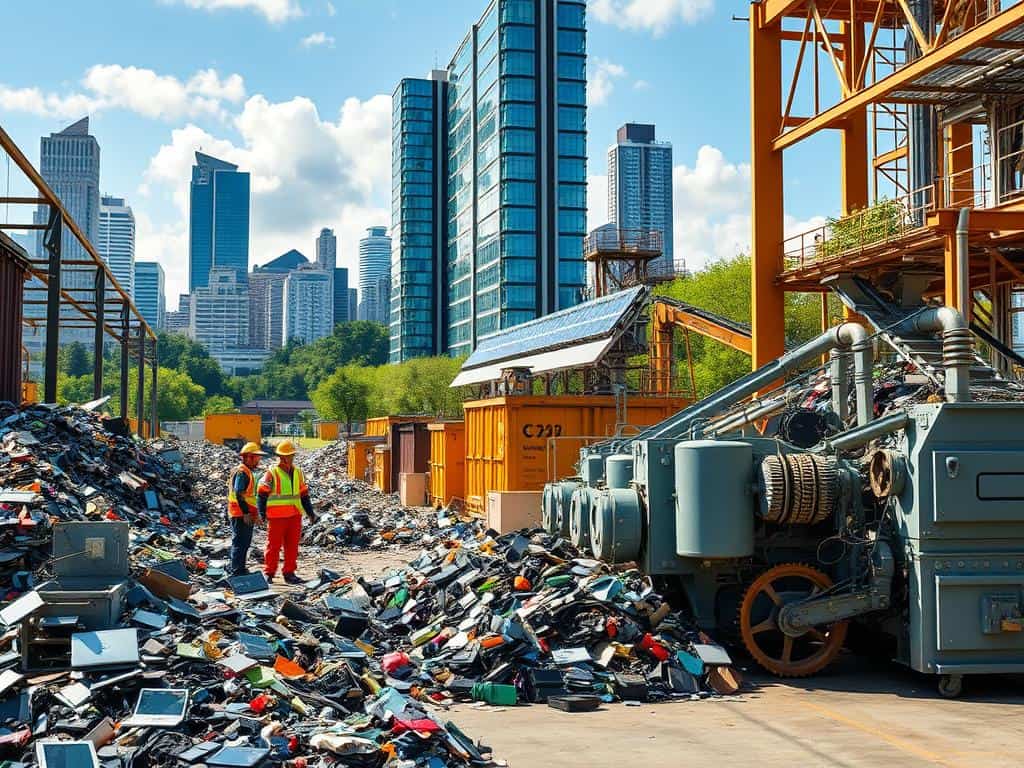
Real-World Recycling Partnerships in the U.S.
One standout example is the work of Great Lakes Electronics Corporation. They’ve partnered with manufacturers and local communities to recover valuable metal from old devices. Their efforts show how collaboration can turn waste into resources.
Another success story comes from a program in California. Here, recyclers and tech companies work together to process discarded smartphones. This partnership has recovered tons of precious materials, reducing the need for mining.
Success Stories and Practical Approaches
I’ve seen firsthand how these initiatives can make a difference. In one case, a recycling facility in Texas used advanced techniques to extract gold from old electronics. This not only saved resources but also created jobs for local residents.
These efforts align with a larger goal: creating a circular economy. By recovering materials, we reduce waste and protect the environment. It’s a win-win for everyone involved.
“Every person has a role to play in reducing electronic waste. Together, we can build a sustainable future.”
As someone deeply involved in sustainability, I believe these stories offer hope. They show that with the right approach, we can tackle this challenge and create a better world for future generations.
Urban Mining and the Value of Electronic Components
I recently discovered that old electronics are more than just clutter—they’re a treasure trove of valuable resources. Urban mining is transforming the way we view discarded devices, turning them into a source of precious metals and materials. This innovative approach not only reduces waste but also creates significant economic and environmental benefits.
Recoverable Precious Metals and Resources
Discarded electronics contain a wealth of recoverable parts, including gold, silver, and copper. These materials are often more concentrated in old devices than in traditional mining sources. For example, one ton of mobile phones can yield over 100 times more gold than a ton of mined ore.
Advanced techniques like hydrometallurgy and bioleaching are used to extract these valuable items safely. These methods ensure that harmful substances like mercury are properly managed, protecting both health and the environment.
Economic and Environmental Benefits
Urban mining offers dual benefits. Economically, it creates jobs in the recycling industry and reduces the need for costly mining operations. Environmentally, it minimizes the release of toxic substances into the air and water, safeguarding ecosystems and public health.
By reclaiming materials from old devices, we can reduce the environmental burden and promote a circular economy. This way of repurposing waste gives pre-loved items a new lease on life, reducing overall exposure to hazardous materials like mercury.
“Urban mining is not just about recycling—it’s about redefining waste as a resource. This approach can transform our environmental and economic landscape.”
These efforts show that with the right techniques, we can turn a global challenge into an opportunity. Urban mining is paving the way for a more sustainable future, one device at a time.
Educating Consumers and Promoting Responsible Recycling
I’ve always believed that change starts with awareness, especially when it comes to how we handle our old devices. Many people don’t realize the chemical hazards lurking in their discarded electronics or the time it takes for these toxins to break down. That’s why education is the first step toward meaningful action.
Community Engagement Initiatives
One of the most effective ways to spread awareness is through community programs. I’ve seen local workshops teach people how to safely recycle their devices. These events often highlight the dangers of improper disposal, like the release of harmful chemicals into the environment.
For example, a neighborhood in California organized a recycling drive that collected over 500 old devices. Volunteers explained the process and showed how recovered materials could be reused. It was inspiring to see how education could lead to immediate action.
Digital Campaigns and Personal Responsibility
Digital platforms are also playing a crucial role. Social media campaigns can reach millions, teaching people about the importance of e-waste recycling. I’ve shared posts that explain how to find local recycling centers or participate in manufacturer take-back programs.
But it’s not just about sharing information—it’s about taking personal responsibility. I’ve made it a habit to recycle my old electronics properly. It’s a small step, but if everyone does their part, we can make a big difference today.
“Every device we recycle is a step toward a cleaner, healthier planet. The time to act is now.”
Here are a few actionable steps you can take:
- Educate yourself about local recycling options.
- Spread awareness through social media or community events.
- Support companies that prioritize sustainable practices.
By working together, we can reduce the impact of toxins and create a more sustainable future. The power to change starts with each of us.
Regulatory Policies and the Future of E-Waste Management
Regulating the disposal of outdated electronics has become a pressing issue in recent years. As the volume of discarded devices grows, so does the need for effective policies to manage this waste. Without proper regulation, the environmental and health risks associated with improper disposal continue to escalate.
Legislative Challenges and U.S. State Approaches
In the U.S., the lack of a comprehensive federal law for electronic device recycling has created a patchwork of state-level regulations. Currently, 28 states and the District of Columbia have enacted their own e-waste laws. These laws vary widely, with some states focusing on producer responsibility and others on consumer fees.
California, for example, has implemented one of the most robust systems through its Covered Electronic Waste (CEW) Recycling Program. Funded by a consumer recycling fee, this program addresses specific devices like video displays. However, it only covers a subset of the larger e-waste stream, leaving gaps in overall management.
Other states, like New York, have taken innovative steps by passing the “Digital Fair Repair Act.” This law requires manufacturers to provide repair information and parts, extending the lifespan of electronic devices and reducing waste. These state-level efforts are commendable, but the absence of a unified federal approach limits their overall impact.
Environmental Risks and Long-Term Effects
Improper disposal of electronic devices poses significant environmental risks. When these items end up in landfills, toxic chemicals like lead and mercury can leach into the soil. Over time, this contamination can spread to water sources, affecting ecosystems and public health.
Children and pregnant women are particularly vulnerable to these hazards. Exposure to these substances can lead to serious health issues, including neurodevelopmental problems and respiratory conditions. Addressing these risks requires not only better recycling methods but also stronger regulatory frameworks.
“The absence of a federal e-waste law in the U.S. is a missed opportunity to protect our environment and public health. State-level efforts, while valuable, need to be supported by a unified national strategy.”
Looking Ahead: The Future of E-Waste Regulation
Over the past year, there has been growing momentum to improve e-waste management policies. States like Texas and Illinois are crafting legislation to enhance recycling rates and hold producers accountable. These efforts aim to create a circular economy where materials from old devices are reused rather than discarded.
Looking forward, a federal approach could drive systemic change. By establishing clear guidelines and funding mechanisms, the U.S. can better manage the growing volume of electronic waste. This would not only protect the environment but also create economic opportunities in the recycling industry.
As we move into the next decade, the focus must be on collaboration. Governments, manufacturers, and consumers all have a role to play in reducing the impact of discarded electronics. Together, we can build a sustainable future where every device is responsibly managed.
Future Trends and Technological Advancements in E-Waste Recycling
The future of handling outdated devices is evolving faster than ever, thanks to groundbreaking innovations. These advancements are not just addressing the e-waste problem—they’re redefining how we think about technology and its lifecycle. From biodegradable components to modular designs, the possibilities are endless.
Emergence of Biodegradable Electronics
One of the most exciting developments is the rise of biodegradable electronics. Researchers are creating components that break down naturally, reducing the tons of waste generated annually. For example, scientists have developed circuit boards made from plant-based materials that decompose safely.
This innovation could significantly cut down on the environmental impact of discarded devices. By replacing traditional materials with biodegradable alternatives, we can turn harmful waste into a valuable resource for the planet.
Right to Repair and Modular Design Innovations
Another game-changer is the right-to-repair movement. This initiative empowers consumers to fix their devices instead of replacing them. Companies are now designing products with modular components, making repairs easier and extending the lifespan of electronics.
For instance, modular smartphones allow users to replace individual parts like the battery or screen. This approach not only reduces waste but also challenges the traditional model of disposable technology.
“The right to repair is more than a movement—it’s a revolution in how we consume and discard electronics.”
These trends are reshaping the industry, turning what was once measured in tons of waste into opportunities for innovation. By embracing these advancements, we can create a more sustainable future where technology works in harmony with the environment.
Conclusion
The journey to tackle the growing issue of discarded electronics has shown that collaboration and innovation are key. Throughout this article, we’ve explored groundbreaking methods that turn waste into valuable resources. From advanced sorting techniques to urban mining, these approaches are reshaping how we handle outdated devices.
Recycling remains the most effective way to manage this challenge. It not only reduces environmental harm but also recovers precious materials like gold and copper. Manufacturers play a crucial role in this process by designing products that are easier to recycle and supporting take-back programs.
The comprehensive information shared by experts highlights the need for a unified strategy. By working together, we can address the risks posed by toxic substances like lead and create a sustainable future. It’s time for all of us to take action—educate ourselves, support responsible practices, and advocate for stronger policies.
Through collaboration and innovation, we can overcome this challenge. Let’s turn the tide on discarded electronics and build a cleaner, healthier planet for generations to come.

