Have you ever wondered why people in different parts of the world act the way they do? Cultural norms are the unwritten rules that guide behavior in every society. They shape how we interact, what we value, and even how we see the world.
These norms can be informal expectations or formal laws. For example, in some places, it’s common to take off your shoes before entering a home, while in others, it’s not. These practices reflect the values and beliefs of a community.
Scholars like Richard A. Shweder have studied how these norms evolve over time. In today’s connected world, traditional customs often mix with new social practices. This creates a fascinating blend of old and new.
Understanding these differences helps us appreciate the diversity around us. It also reminds us that what’s normal in one place might be surprising in another. Let’s explore some of these unique norms together.
Key Takeaways
- Cultural norms are unwritten rules that guide behavior in society.
- They can be informal expectations or formal laws.
- Norms reflect the values and beliefs of a community.
- They evolve over time, blending old and new practices.
- Understanding norms helps us appreciate global diversity.
Intriguing Origins and Evolving Definitions
What shapes the unwritten rules that guide our daily lives? These norms often emerge from shared experiences within a community, evolving naturally over time. Early forms of these practices were rooted in traditions, later becoming formalized into societal rules.
Scholars like Richard A. Shweder have explored how norms are defined and prescribed. According to Shweder, norms are not static; they adapt to reflect the values of their time. This dynamic nature ensures they remain relevant in changing societies.
Peter Katzenstein and others have highlighted the role of norms in organizing behavior. Despite disagreements among scholars, there’s consensus on their importance. Norms provide a framework for interactions, shaping how individuals and groups function within a society.
“Norms are the invisible threads that weave the fabric of society, guiding actions and expectations.”
Over centuries, these traditions have transformed, blending old practices with new influences. This evolution reflects the adaptability of human communities. Understanding this process helps us appreciate how historical definitions shape today’s cultural practices.
In the next sections, I’ll explore how these norms manifest in everyday life, from greetings to family structures. By examining their origins, we gain insight into the forces that shape our world.
Everyday Cultural Practices: Traditions in Action
Everyday life is filled with small actions that reflect deeper societal values. From how we greet each other to how we share meals, these practices shape our interactions. They reveal the values and beliefs of a community, often in ways we don’t even notice.
Unique Greeting Customs and Social Etiquette
Greetings are one of the first ways we connect with others. In the U.S., a firm handshake is common, but in Japan, a bow shows respect. In France, a kiss on the cheek is a warm gesture. These differences highlight how behavior varies across cultures.
I’ve noticed how these customs can feel surprising when traveling. A handshake might feel too formal in one place, while a bow might feel unfamiliar in another. These small actions carry big meanings.
Family Structures and Table Manners
Family dynamics also reflect cultural practices. In the U.S., meals are often casual, with everyone serving themselves. In China, elders are served first, showing respect for age and status. These traditions shape how we interact with our family members.
Table manners are another example. In Bolivia, finding a coin in a cake on New Year’s Eve symbolizes good luck. These practices remind us how food and community are deeply connected.
Gender Roles and Personal Space
Gender roles and personal space also vary widely. In some cultures, men and women have distinct roles, while in others, these lines are blurred. Personal space is another area of difference. In the U.S., people often prefer more distance, while in Latin America, closer contact is normal.
These differences aren’t just about tradition. They reflect the values of a society and how individuals relate to one another. Understanding them helps us navigate the world with greater empathy.
“Every custom, no matter how small, tells a story about the people who practice it.”
From greetings to family meals, these everyday practices are more than just habits. They are windows into the heart of a culture. By observing and respecting them, we can build bridges across differences.
Exploring Cultural Norms: How Shared Practices Shape Society
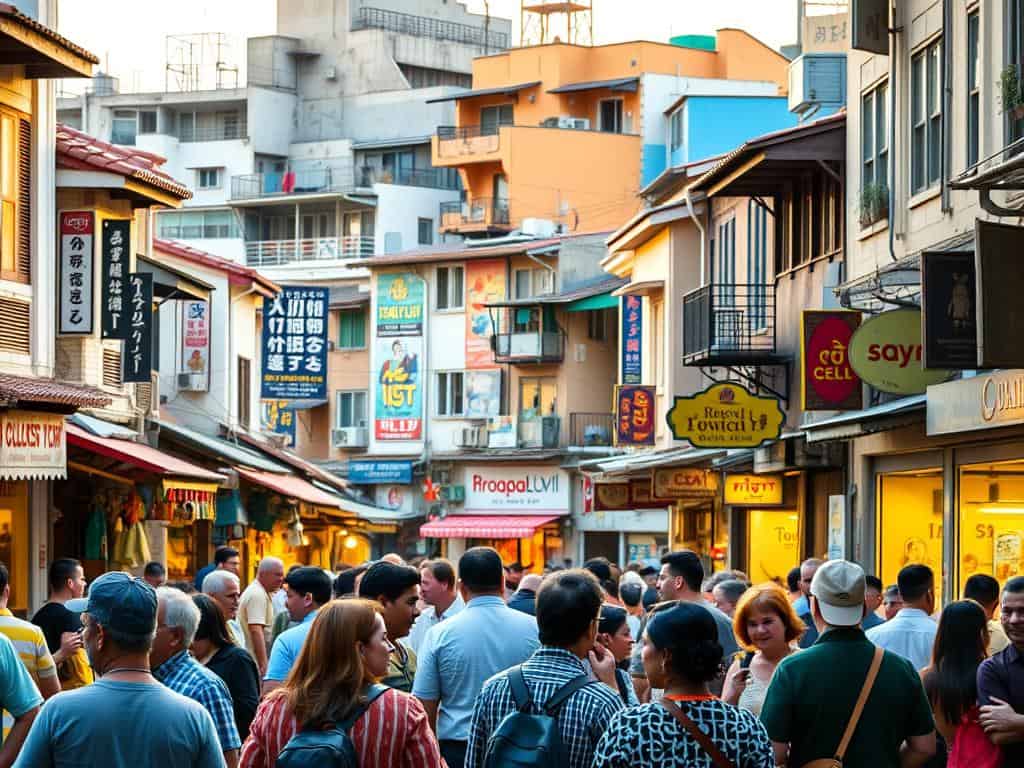
What makes certain behaviors acceptable in one place but not in another? The answer lies in the unwritten rules that guide our actions. These norms are deeply rooted in the values of a community, shaping how individuals interact and function within a society.
Norms vs. Laws: Understanding the Differences
While laws are formal rules enforced by a legal system, norms are informal expectations upheld by social pressure. For example, in the U.S., jaywalking might be illegal, but in some cities, it’s a common practice. Breaking a law can lead to legal consequences, but violating a norm often results in interpersonal disapproval.
Research shows that norms are more flexible than laws. They adapt over time, reflecting changes in societal values. This adaptability ensures they remain relevant, even as laws stay rigid.
Social Hierarchy, Identity, and Group Behavior
Social hierarchy plays a significant role in shaping behavior. In many societies, individuals are expected to act according to their role or status. For instance, in some Asian cultures, showing respect to elders is a deeply ingrained norm.
Group dynamics also influence how people behave. Studies in psychology reveal that individuals often conform to group expectations to avoid social rejection. This conformity reinforces shared practices, creating a sense of unity within the community.
“Norms are the silent architects of society, shaping behavior without a single written rule.”
Understanding these distinctions helps us appreciate how societies function. Whether it’s through laws or norms, every culture has its own way of maintaining order and guiding behavior.
The Role of Media, Storytelling, and Innovation in Shaping Norms
Stories have the power to reshape how we see the world and influence our actions. I’ve always been fascinated by how narratives can change perceptions and drive societal shifts. Media and storytelling aren’t just reflections of norms—they actively shape them, creating new ways of thinking and behaving.
The Power of Storytelling in Changing Perceptions
Take the UN Refugee Agency’s initiatives, for example. Their storytelling campaigns have shifted how people view refugees, fostering empathy and understanding. Research shows that when individuals see role models adopting new behaviors, they’re more likely to follow suit. This is why storytelling is such a powerful tool for norm change.
I’ve noticed how stories can reframe moral and social expectations. A study found that framing a call to action as a norm—like highlighting how many people have already donated—increased participation. This approach taps into our desire to align with group behavior.
Innovative Campaigns and Norm Shift Interventions
Innovation plays a key role in driving these changes. The UNHCR’s introduction of an innovation team in 2012 is a great example. Their efforts have improved efficiency and productivity, showing how strategic interventions can reshape organizational norms.
Experiments in schools and communities have also demonstrated the impact of innovation. For instance, a program in New Jersey reduced bullying by 30% by using peer influencers to model positive behavior. These interventions highlight the importance of creativity in inspiring change.
“Storytelling is the bridge between what is and what could be, transforming norms one narrative at a time.”
From media campaigns to grassroots initiatives, storytelling and innovation are essential tools for shaping norms. They remind us that change is possible, one story at a time.
Practical Examples and Global List of Surprising Norms
From tipping to greetings, small actions carry big meanings across the globe. These everyday practices reveal the values of a community and shape how we interact with others. Let’s explore some surprising norms that might feel familiar or completely foreign, depending on where you’re from.
Customs and Traditions in the United States
In the U.S., tipping is a widely accepted norm. At restaurants, leaving 10-20% of the bill is expected, reflecting the low wages of wait staff. I’ve noticed how this practice can feel confusing to visitors from countries like South Korea, where tipping is seen as unnecessary or even insulting.
Another example is requesting meal alterations. In the U.S., it’s common to ask for substitutions or changes to a dish. This flexibility reflects the emphasis on individual preferences. However, in some cultures, altering a meal might be considered disrespectful to the chef.
Global Hybridization and Changing Norms
Globalization has led to the blending of traditions, creating new norms. For instance, in Greece, the custom of spitting to ward off evil has evolved into saying “ftou ftou ftou” at weddings. This shows how old practices adapt to modern contexts.
In Japan, slurping noodles is a sign of enjoyment, while in Western societies, it’s often seen as rude. These differences highlight how behavior can vary widely, even for something as simple as eating.
Case Studies from Research and Institutional Change
Research shows how norms can drive societal shifts. A study in New Jersey reduced bullying by 30% by using peer influencers to model positive behavior. This approach highlights the power of group dynamics in shaping actions.
Another example is the UN Refugee Agency’s storytelling campaigns. By sharing personal stories, they’ve changed how people view refugees, fostering empathy and understanding. These case studies demonstrate how norms can evolve through intentional efforts.
“Norms are the silent architects of society, shaping behavior without a single written rule.”
From tipping in the U.S. to slurping in Japan, these examples show how norms reflect the values of a society. They also remind us that traditions are dynamic, blending old and new practices to meet the needs of a changing world.
Conclusion
Exploring how societies function has always fascinated me. Throughout this article, I’ve learned how norms evolve, blending traditions with modern influences. These unwritten rules shape our behavior, reflecting the values of a community.
Historical and scholarly perspectives, combined with real-life examples, show how dynamic these practices are. Media and innovation play transformative roles, driving change and reshaping societal expectations. Understanding these nuances offers valuable insight into group dynamics and social shifts.
I encourage you to observe and appreciate the diverse ways these norms influence daily life. This exploration has deepened my understanding of how subtle actions reflect larger societal values. In our rapidly changing world, studying and adapting to these norms remains essential.

