I remember the early days of the pandemic when everything felt uncertain. Offices closed, and suddenly, my dining table became my desk. What started as a temporary solution has now transformed into a lifestyle many of us embrace. Remote work, once a rare privilege, has become a cornerstone of modern employment.
According to the U.S. Career Institute, the shift to remote and hybrid setups has reshaped how we think about productivity and flexibility. Many organizations have adopted these models, recognizing the benefits they bring to both employees and employers. It’s not just about convenience; it’s about creating a better balance between professional and personal lives.
Today, the debate isn’t about whether remote work is here to stay—it’s about how we can make it even better. From eliminating long commutes to fostering a healthier work environment, the advantages are undeniable. As we navigate this new era, it’s clear that remote work isn’t just a trend; it’s a fundamental shift in how we approach our careers.
Key Takeaways
- Remote work has evolved from a temporary solution to a permanent option for many.
- Organizations are increasingly adopting hybrid models to meet employee needs.
- Eliminating commutes has improved work-life balance for many professionals.
- Remote work is associated with higher job satisfaction and reduced stress.
- The shift to remote work has led to significant changes in traditional office cultures.
The Evolution of Remote Work in Today’s Landscape
The pandemic reshaped how we view productivity and collaboration. What began as a temporary solution has now become a defining feature of modern employment. Remote work has evolved from a necessity to a preferred option for many employees and workers across the U.S.
From Pandemic to Hybrid Models
When offices closed in 2020, many of us adapted to working from home. Over time, this shift revealed the benefits of flexibility and autonomy. Today, hybrid models—combining remote and in-office work—are gaining popularity. “Employees want the best of both worlds,” says a recent survey. This approach allows workers to save time on daily commutes while maintaining connections with their teams.
Data shows that 58% of Americans now have the option to work remotely at least once a week. This flexibility has led to higher job satisfaction and reduced stress levels. Companies are responding by investing in tools and policies that support hybrid setups.
Shifting Workplace Norms in the United States
Workplace norms are changing rapidly. In states like California and New York, many businesses have embraced remote work as a long-term strategy. Meanwhile, other regions are seeing a gradual return to traditional office environments. However, the demand for flexibility remains strong.
“The future of work is not about where you are, but how you contribute,”
This shift has also impacted daily routines. For many, the day now starts with virtual meetings and flexible schedules. Employees are finding new ways to balance their professional and personal lives, making remote work a cornerstone of modern employment.
Work From Home Trends: Data and Insights
The way we approach our careers has shifted dramatically in recent years. Remote setups have become a key part of this transformation, offering flexibility and efficiency. Let’s dive into the latest statistics and demographic insights shaping this new era.
Recent Statistics Shaping Remote Work
Recent data reveals that 58% of Americans now have the option to work remotely at least once a week. This flexibility has led to significant savings for companies, including reduced office rent and overhead costs. Employees, on the other hand, save an average of 55-72 minutes per day on commute time.
According to surveys, 83% of employees report increased productivity when working remotely. This shift has also reshaped traditional office norms, with many businesses adopting hybrid models to meet employee needs. “The future of work is about flexibility and results,” says a recent industry report.
Demographics of the Remote Workforce
Certain jobs are more commonly performed remotely, particularly in tech, finance, and creative industries. Senior-level roles are more likely to offer remote options, with 29% of hybrid jobs catering to professionals with five or more years of experience.
Demographic trends also show that 75% of remote workers earn over $65,000 annually, placing them in the upper income bracket. This highlights how remote setups are not just a convenience but a strategic advantage for both employees and companies.
“Remote work is no longer a perk—it’s a necessity for attracting top talent.”
As the job market evolves, more professionals are seeking roles that offer flexibility. This trend is reshaping how companies operate and compete in today’s economy.
Benefits of Embracing Remote Work
Over the past year, the shift to remote setups has brought unexpected advantages. From improved mental health to significant financial savings, the benefits are hard to ignore. This transformation has reshaped how we think about productivity and well-being.
Mental, Physical, and Financial Advantages
One of the most notable benefits is the positive impact on mental health. Studies show that remote arrangements reduce stress levels and provide the freedom to manage one’s own schedule. This flexibility allows each person to create a routine that works best for them.
Financially, the savings are substantial. Eliminating daily commutes saves both time and money. On average, individuals save over $4,000 per year on transportation and related expenses. Companies also benefit by reducing office-related costs.
Environmental Impact and Commute Savings
Remote setups have a significant environmental benefit. Fewer commutes mean reduced greenhouse gas emissions. This shift aligns with the growing trend of companies prioritizing sustainability.
Additionally, digital tools and services have improved the remote experience. Platforms like Zoom and Slack ensure seamless collaboration, making it easier for teams to stay connected and productive.
“Remote work isn’t just a perk—it’s a necessity for a sustainable future.”
As this trend continues, it’s clear that remote arrangements offer advantages that extend far beyond convenience. They’re shaping a healthier, more efficient, and environmentally conscious way of working.
Employee Perspectives on Remote and Hybrid Work
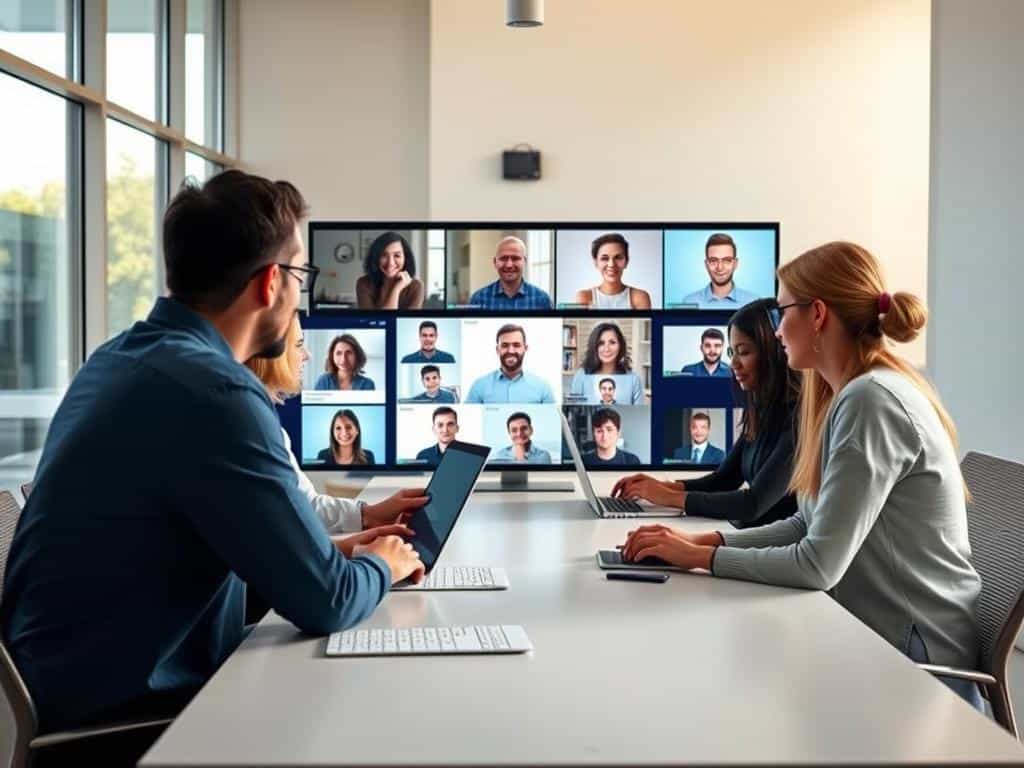
Employees are sharing their experiences with remote and hybrid models. These setups have reshaped how the workforce approaches productivity and personal lives. Surveys reveal that a high percentage of professionals report improved work-life balance, though challenges remain.
Enhancing Work-Life Balance
One of the most significant benefits of remote setups is flexibility. A recent report shows that 71% of employees feel better able to manage their personal and professional lives. This option allows individuals to create schedules that suit their needs.
For example, eliminating daily commutes saves time and reduces stress. Many professionals now use this extra time for family, hobbies, or self-care. This shift has led to higher job satisfaction and overall well-being.
Onboarding and Career Progression Challenges
While remote setups offer many advantages, they also present challenges. Onboarding new employees can be tricky without in-person interactions. A percentage of professionals report feeling disconnected during this process.
Career progression is another area of concern. Some employees worry that remote setups limit opportunities for mentorship and visibility. However, companies are finding ways to address these issues through virtual training and regular check-ins.
“Remote work isn’t just about flexibility—it’s about creating a supportive environment for growth,” says a recent industry report.
As the workforce continues to adapt, it’s clear that remote and hybrid models are here to stay. By addressing challenges and leveraging benefits, companies can create a more balanced and productive future for their employees.
Employer Insights and Productivity Gains
Employers are discovering the untapped potential of flexible work arrangements. Surveys show that 79% of managers believe their teams are more productive when working remotely. This shift has led to significant changes in how businesses operate and manage their workforce.
Managerial Trust and Increased Efficiency
Trust plays a key role in the success of hybrid remote models. When employees are given the freedom to manage their schedules, they often deliver better results. “Flexibility fosters accountability,” says a recent industry report. This approach has proven effective for many U.S. businesses.
For example, companies with flexible policies report higher employee satisfaction and retention. By eliminating daily commutes, workers save time and energy, which translates into increased efficiency. This balance between in-office and remote part-time work is reshaping traditional workplace norms.
“Trust between employers and employees is the foundation of a productive hybrid remote model.”
Many businesses are also investing in tools to support collaboration. Platforms like Slack and Zoom ensure seamless communication, even when teams are spread across locations. This investment in technology further enhances productivity and teamwork.
As the professional landscape continues to evolve, flexibility remains a top priority. Employers who embrace these changes are not only improving efficiency but also creating a more dynamic and engaged workforce.
Remote Work by Industry and Occupation Trends
The rise of remote setups has reshaped industries in ways we never imagined. From tech to finance, the way we approach our careers has evolved significantly. This shift is not just about location; it’s about redefining productivity and flexibility across sectors.
Leading Sectors Embracing Remote Models
Tech and finance are at the forefront of this transformation. In the U.S., 58% of tech professionals now have the option to work remotely at least once a week. This flexibility has led to higher job satisfaction and increased efficiency. “Remote setups are no longer a perk—they’re a necessity,” says a recent industry report.
Finance is another sector that has embraced this change. Many firms now offer hybrid models, allowing employees to balance in-office collaboration with remote productivity. This approach has proven effective in states like California and New York, where remote adoption rates are highest.
Expanding Roles in Tech, Finance, and More
The way remote setups are revolutionizing occupational trends is remarkable. In tech, roles like software development and data analysis are increasingly performed remotely. Similarly, finance professionals in roles such as financial planning and analysis are benefiting from this flexibility.
State-specific data shows that remote adoption varies widely. For example, in Texas, 45% of finance professionals work remotely, compared to 60% in California. These differences highlight how local factors influence remote work penetration.
“The world of finance and tech is evolving rapidly, and remote setups are at the heart of this change.”
Globally, the trend is clear. Companies in the world of finance and tech are investing in tools and policies to support remote setups. This shift is not just a response to the pandemic; it’s a long-term strategy to attract top talent and stay competitive.
Geographic Trends: Where Remote Work Thrives
Geographic flexibility is reshaping how we think about productivity and lifestyle. Across the U.S., certain states and cities are emerging as leaders in remote work adoption. This shift is not just about where people work but also how they live, with reduced commutes and enhanced quality of life driving these changes.
States and Cities Setting the Standard
States like Colorado and Maryland are at the forefront of this transformation. In these regions, professionals are embracing remote hybrid work models, balancing in-office collaboration with the flexibility of working from home. Cities such as Miami are also gaining popularity, offering a vibrant lifestyle and shorter commute times.
Research shows that in leading metropolitan areas, professionals spend an average of 3.5 days per week working remotely. This flexibility allows them to save time and energy, which they can invest in personal pursuits or family. “Reduced commutes are a game-changer,” says a recent industry report. This trend is reshaping residential choices, with many opting for locations that support a work home lifestyle.
“The appeal of remote work lies in its ability to blend productivity with a better quality of life.”
Urban cores like New York City and San Francisco have seen population declines as professionals move to suburban areas. These shifts highlight how remote hybrid work is influencing where people choose to live. Cities that offer a mix of affordability, amenities, and connectivity are setting new standards for modern employment.
As this trend continues, it’s clear that geographic flexibility is more than a perk—it’s a fundamental shift in how we approach our careers and lifestyles. By embracing these changes, professionals are finding new ways to thrive in a rapidly evolving world.
Future Outlook: Transitioning to Remote-First Models
The future of work is being redefined by the growing adoption of remote-first models. By 2025, experts predict a significant increase in professionals choosing to work remotely full-time, while others will opt for hybrid arrangements. This shift is reshaping traditional office settings and creating new opportunities for flexibility.
Projections and Predictions for 2025
Recent studies suggest that 28% of employees worldwide will be working remotely by 2025, up from 20% in 2020. In the U.S., this number is expected to rise to 35 million people. Hybrid models, where employees split their time between home and the office, will also gain traction. Many professionals will choose to work remotely three to four days per week, balancing productivity with in-person collaboration.
One of the key drivers of this trend is the proven efficiency of remote setups. Research shows that employees save an average of 55-72 minutes day per commute, leading to higher job satisfaction. Companies are also benefiting from reduced overhead costs and increased productivity. “Remote-first models are not just a trend—they’re the future of work,” says a recent industry report.
“By 2025, businesses will prioritize tools and policies that support seamless remote collaboration.”
However, this transition is not without challenges. Onboarding new hires and maintaining team cohesion can be more complex in remote-first environments. Companies will need to invest in technology and training to address these issues. Despite these hurdles, the benefits of remote-first models—such as improved work-life balance and reduced stress—make them a compelling choice for both employees and employers.
Looking ahead, I believe this shift will have a profound impact on how we approach our careers. For individuals, it means greater autonomy and flexibility. For industries, it represents an opportunity to rethink traditional norms and embrace innovation. The transition to remote-first models is not just a response to recent changes—it’s a long-term strategy for success.
Conclusion
The shift to remote setups has fundamentally changed how we view productivity and flexibility. What began as a temporary solution has evolved into a lasting transformation, reshaping the modern workplace. Both employers and remote employees are reaping the benefits of adaptable practices, from increased efficiency to improved work-life balance.
Hybrid models, combining in-office collaboration with remote flexibility, are becoming the norm. This approach allows professionals to manage their schedules while maintaining connections with their teams. For employers, this means reduced overhead costs and higher retention rates. For employees, it translates into greater autonomy and satisfaction.
As we look ahead, it’s clear that remote setups are not just a passing phase. They represent a fundamental shift in how we approach our careers and daily lives. By embracing these changes, we’re creating a more dynamic and sustainable future for the workforce.

