Have you ever imagined living in a place where technology works seamlessly to make life easier? I often think about how our urban spaces are evolving, and it’s fascinating to see how digital innovations are reshaping the way we live. From smarter transportation systems to energy-efficient buildings, the future of our cities is being redefined.
At its core, a smart city uses digital tools to collect data from various sources like devices, buildings, and even cameras. This data helps improve essential services such as public safety, energy management, and transportation. For example, real-time traffic monitoring can reduce congestion, while smart grids ensure efficient energy distribution.
Leading projects in places like New York and San Francisco are already showing how technology can modernize urban living. By combining people, technology, and processes, these cities are setting the stage for a more connected and sustainable future. Let’s explore how this integration is transforming urban infrastructure and what it means for our daily lives.
Key Takeaways
- Smart cities use digital technologies to enhance urban services.
- Data from devices and systems optimizes transportation and energy management.
- Real-world examples include smart grids and IoT-powered monitoring.
- Leading cities like New York are modernizing urban living.
- Technology integration improves quality of life and sustainability.
Introduction: My Journey into Smart Cities
My fascination with urban innovation began with a simple question: How can technology reshape our daily lives? This curiosity led me to explore the evolution of urban spaces, particularly how digital tools are transforming the way we live, work, and interact. From early projects like IBM’s Smarter Planet to modern IoT networks, I’ve witnessed firsthand the potential of technology to create more efficient and sustainable environments.
One of the most striking aspects of this journey has been the evolution of energy systems. Traditional grids are being replaced by intelligent networks that optimize power distribution and reduce waste. For example, Microsoft’s Redmond campus tracks millions of data points daily, achieving significant energy savings through AI-driven solutions. This shift not only improves operational efficiency but also sets a benchmark for other urban areas.
Real-time data has also revolutionized decision-making in urban planning. By analyzing information from sensors and devices, cities can address issues like traffic congestion and resource allocation more effectively. Projects like Yas Island’s digitalization efforts showcase how personalized experiences can enhance community engagement and satisfaction.
My transition from traditional city management to embracing smart tech solutions has been eye-opening. Early initiatives, such as the integration of IoT networks, laid the foundation for today’s advancements. These projects demonstrated how technology could bridge gaps between infrastructure and digitization, paving the way for a more connected future.
Notable achievements in this field have been a constant source of inspiration. From smart grids to AI-powered analytics, these innovations highlight the transformative power of technology. As I delve deeper into this guide, I’ll explore key themes like infrastructure modernization, the role of digital networks, and the socio-economic impact of these changes.
Defining and Understanding Smart Cities
Urban spaces are evolving rapidly, and understanding their transformation is key to envisioning the future. At the heart of this evolution lies the concept of a smart city, a term that has gained traction in academic and practical circles. According to Caragliu et al. (2011), a smart city leverages information and communication technologies (ICT) to enhance urban services and improve quality of life.
Core principles of these initiatives include connectivity, data-driven decision-making, and sustainable urban development. For instance, New York City has implemented a robust program that integrates IoT sensors to monitor traffic and energy usage. This approach not only optimizes resource allocation but also reduces the city’s carbon footprint, aligning with broader environmental goals.
ICT solutions form the backbone of these initiatives, fostering innovation and efficiency. From smart grids to real-time data analytics, technology is reshaping how cities operate. New York’s initiatives, such as its smart lighting program, demonstrate how structured urban frameworks can drive meaningful change.
However, definitions of smart cities vary across studies. Some emphasize technological integration, while others focus on community engagement. Common themes include the use of data to improve services and the importance of sustainability. For example, New York’s program balances technological advancements with community needs, ensuring that innovations benefit all residents.
While the benefits are clear, criticisms exist. Concerns about data privacy and the digital divide highlight the need for balanced implementation. Despite these challenges, the convergence of technology, environmental sustainability, and community engagement offers a promising path forward. As cities like New York continue to innovate, they set a benchmark for others to follow.
The Evolution of Urban Innovation and Technology
The journey of urban innovation is a story of constant evolution. From early data projects to modern tech hubs, cities have embraced digital tools to transform how they operate. This shift has reshaped urban management, paving the way for more efficient and sustainable environments.
Historical Perspective and Modern Developments
In the 1970s, Los Angeles pioneered early data projects to improve traffic flow. These initiatives laid the groundwork for today’s advanced management systems. Similarly, Singapore’s National Computer Board in the 1980s set a benchmark for integrating technology into urban planning.
Fast forward to today, and cities like New York are leading the charge. Their smart lighting program uses IoT sensors to optimize energy usage. This approach not only reduces costs but also aligns with broader sustainability goals.
The role of management has evolved significantly. Early projects focused on basic data collection. Now, cities leverage real-time analytics to make informed decisions. For example, New York’s traffic monitoring system has reduced congestion by 12%.
These advancements highlight the transformative power of technology. From early digital initiatives to modern urban innovation, cities are setting new standards for efficiency and sustainability. As we look ahead, the integration of robust ICT infrastructures will continue to shape the future of urban management.
Exploring Smart Cities and Their Transformative Impact
The integration of technology into urban spaces is reshaping how we live and interact with our environment. From reducing carbon footprints to enhancing public services, these advancements are creating a more sustainable and efficient future. Let’s dive into the socio-economic and environmental transformations that are redefining urban living.
Socio-Economic and Environmental Transformations
One of the most significant benefits of these innovations is their impact on climate resilience. By optimizing energy use and reducing emissions, urban areas are becoming more sustainable. For example, the European Commission aims to make 100 European cities climate-neutral by 2030. This goal highlights the potential of technology to combat environmental degradation.
Public safety has also seen remarkable improvements. Real-time data and predictive analytics are helping cities address crime and emergencies more effectively. Cities like New York have implemented systems that reduce response times and enhance community safety. These advancements are not just about technology—they’re about creating safer spaces for everyone.
On the socio-economic front, these innovations are driving job creation and improving public services. From work environments to community engagement, technology is fostering inclusivity and efficiency. For instance, digital platforms are enabling residents to participate in decision-making processes, ensuring that urban development meets their needs.
These transformations are not without challenges. Balancing technological advancements with ethical concerns, such as data privacy, remains critical. However, the potential for positive change is immense. By integrating ecological and technological strategies, cities are paving the way for a brighter, more sustainable future.
Integrating Information and Communication Technologies in Urban Landscapes
The way we manage urban spaces is changing, and technology is at the forefront of this transformation. By integrating Information and Communication Technologies (ICT), cities are optimizing services, reducing costs, and enhancing citizen engagement. This shift is not just about efficiency—it’s about creating a more responsive and sustainable urban environment.
Benefits of ICT in Urban Service Optimization
One of the most significant advantages of ICT is its ability to streamline urban services. Real-time datum from sensors and devices allows cities to monitor traffic, energy usage, and waste management more effectively. For example, IoT-enabled waste containers can optimize collection routes, reducing operational costs by up to 30%.
Citizen engagement has also improved with digital platforms. Residents can now report issues, access services, and participate in decision-making processes seamlessly. This fosters a sense of community and ensures that urban development meets their needs.
Regulatory compliance is another area where ICT shines. Automated systems ensure that cities adhere to environmental and safety standards, reducing the risk of violations. These advancements highlight the transformative power of technology in urban landscapes.
Overcoming Technical and Financial Challenges
Despite its benefits, ICT integration comes with challenges. Technical issues like interoperability and data security require robust solutions. Cities must adopt common standards and encryption protocols to protect sensitive information.
Financial constraints are another hurdle. Implementing advanced technology can be costly, but public-private partnerships and innovative funding models can help. For instance, San Francisco’s investment in waste management upgrades has yielded significant long-term savings.
By addressing these challenges, cities can fully leverage ICT to create smarter, more sustainable environments. The integration of real-time datum and advanced sensor networks is paving the way for a brighter urban future.
Harnessing IoT and Big Data for Urban Optimization
The fusion of IoT and big data is reshaping urban landscapes, offering solutions that were once thought impossible. By leveraging real-time data and predictive analytics, cities are optimizing essential services and improving the quality of life for residents. This transformation is not just about technology—it’s about creating a more efficient, sustainable, and responsive urban environment.
Real-Time Data and Predictive Analytics
IoT devices are at the heart of this revolution. Sensors embedded in infrastructure collect vast amounts of data, from traffic patterns to energy usage. This real-time information allows cities to monitor and manage resources more effectively. For example, smart parking systems use sensors to guide drivers to available spots, reducing congestion and emissions.
Predictive analytics takes this a step further. By analyzing historical and real-time data, cities can anticipate issues before they arise. For instance, predictive models can forecast traffic jams during peak hours, enabling proactive measures to keep roads clear. This approach not only improves efficiency but also enhances public safety by reducing response times during emergencies.
Innovative applications of big data are also transforming energy distribution. Smart grids use real-time data to balance supply and demand, reducing waste and lowering costs. In some cities, this has led to energy savings of up to 15%, benefiting both the environment and residents’ wallets.
These advancements are not limited to infrastructure. Data-driven applications are enhancing public services, from waste management to healthcare. For example, IoT-enabled waste bins optimize collection routes, cutting operational costs by 20%. Similarly, wearable devices in healthcare provide early disease detection, improving patient outcomes and reducing wait times.
The convergence of IoT and big data is delivering measurable benefits to urban dwellers. By continuously monitoring and analyzing data, cities are becoming more responsive to the needs of their residents. This integration is not just about efficiency—it’s about creating a better quality of life for everyone.
Enhancing Urban Mobility and Transportation Systems
Imagine a world where your daily commute is seamless, efficient, and eco-friendly. This vision is becoming a reality as urban areas adopt advanced technologies to transform transportation systems. From reducing traffic congestion to improving public transit, these innovations are reshaping how we move through our cities.
Innovations in Smart Transportation
One of the most impactful advancements is the integration of adaptive traffic signals. These systems use real-time data to adjust signal timing, reducing delays and improving traffic flow. For example, cities like Los Angeles have seen a 12% reduction in travel times after implementing such projects.
Another game-changer is smart parking. Sensors in parking spaces guide drivers to available spots, cutting down on circling and emissions. This not only saves time but also contributes to cleaner air in urban areas.
Research shows that these technologies can significantly reduce carbon emissions. A study by the European Commission found that Intelligent Transport Systems (ITS) can cut fuel consumption by 11%. This aligns with global goals to combat climate change and create sustainable urban environments.
Communication and Collaboration in Transit
Effective communication between city officials and public transport providers is crucial for seamless operations. Advanced systems enable real-time updates on transit schedules, ensuring that commuters are always informed. This enhances the overall experience and encourages more people to use public transportation.
Sensor-driven data collection is another key factor. By monitoring traffic patterns and transit usage, cities can make informed decisions to optimize routes and reduce congestion. This approach has been successfully implemented in places like Singapore, where electronic road pricing has reduced weekday traffic by 24%.
These innovations are not just about technology—they’re about creating a better quality of life for residents. By investing in research and development, cities can continue to improve their transportation systems and set new standards for urban mobility.
Revolutionizing Energy Efficiency Through Smart Solutions
Energy is the backbone of modern urban life, and optimizing its use is key to a sustainable future. I’ve seen firsthand how innovative solutions are transforming the way we generate, distribute, and consume power. From smart grids to renewable energy integration, these advancements are reshaping urban landscapes.
Smart Grids and Renewable Energy Integration
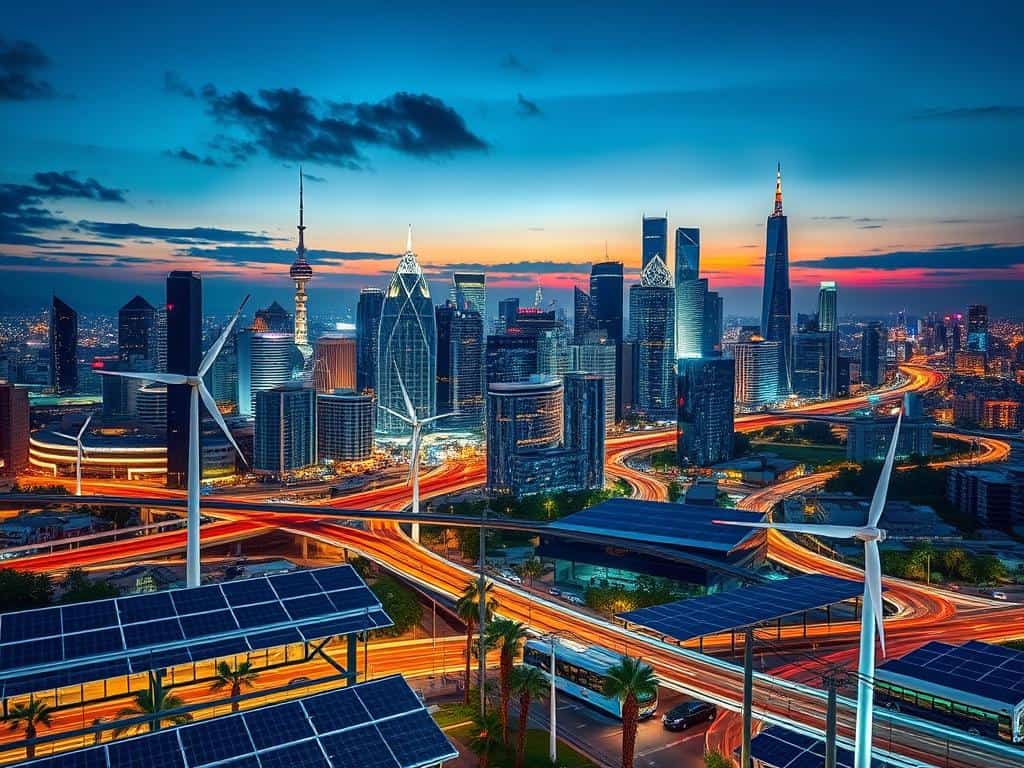
Smart grids are at the forefront of this transformation. By using real-time data, they balance supply and demand, reducing waste and improving efficiency. For example, cities like New York have implemented smart grids that cut energy losses by up to 15%.
Renewable energy sources like solar and wind are also being integrated into urban systems. These technologies not only reduce carbon emissions but also create a more resilient energy infrastructure. In my experience, communities that adopt renewables see significant long-term savings.
Energy Data Management and Sustainability
Effective energy data management is crucial for sustainability. Advanced sensors and digital platforms monitor energy flow, identifying inefficiencies and optimizing usage. This approach has been particularly successful in reducing operational costs for government buildings.
Collaborative governance plays a vital role in driving these innovations. By involving the community in decision-making, cities can ensure that energy solutions meet local needs. For instance, community-led solar projects have empowered residents while reducing reliance on fossil fuels.
These smart solutions are not just about technology—they’re about creating a better quality of life. By reducing emissions and lowering costs, they pave the way for a more sustainable and inclusive urban future.
Strengthening Public Safety and Security in Urban Settings
Public safety is a cornerstone of thriving urban environments, and technology is reshaping how we protect our communities. From advanced surveillance systems to predictive policing, these innovations are making cities safer and more responsive to emergencies. By leveraging real-time information, urban areas can address threats proactively and improve overall health and safety.
Advanced Surveillance and Predictive Policing
Advanced surveillance systems are at the forefront of urban security. These systems use IoT devices, facial recognition, and AI-powered analytics to monitor public spaces. For example, real-time data from cameras and sensors can detect unusual activity, enabling swift responses to potential threats. This approach not only enhances safety but also optimizes resource allocation for law enforcement.
Predictive policing takes this a step further. By analyzing historical and real-time information, these tools can forecast criminal activity before it happens. Cities like Los Angeles have implemented such systems, reducing crime rates by up to 12%. This proactive approach ensures that resources are deployed where they’re needed most, improving public safety and health outcomes.
Collaboration and Real-Time Information Sharing
Collaboration between businesses, technology partners, and government agencies is driving innovation in urban security. For instance, partnerships with tech companies have led to the development of AI-powered surveillance systems that filter out irrelevant data, allowing security teams to focus on critical threats. This synergy ensures that cities stay ahead of emerging challenges.
Real-time information sharing is another game-changer. By integrating data from various sources, such as social media and mobile devices, cities can create a holistic view of urban life. This enables faster emergency responses and more effective public safety measures. For example, during natural disasters, real-time data helps coordinate rescue efforts and allocate resources efficiently.
Balancing Benefits and Privacy Concerns
While these technologies offer significant benefits, they also raise privacy concerns. Striking a balance between surveillance and individual rights is crucial. Cities like San Francisco have implemented policies that ensure ethical use of data, such as blurring faces in video footage to protect privacy. This approach fosters public trust while maintaining security.
By integrating advanced technologies with ethical practices, urban areas can create safer, more resilient communities. The future of public safety lies in harnessing information and collaboration to protect both people and their rights.
Promoting Community Engagement and Digital Democracy
Engaging communities in urban development has never been more critical. I’ve seen how digital tools are transforming the way citizens interact with their governments. From open data initiatives to innovative feedback systems, these advancements are fostering transparency and trust in urban governance.
Citizen Participation and E-Governance
Active citizen participation is the cornerstone of inclusive urban spaces. Digital platforms allow residents to voice their opinions and contribute to decision-making processes. For example, Rotterdam’s recent neighborhood elections saw a 38% voting turnout, highlighting the need for more engaging tools.
Open data initiatives play a crucial role in building trust. By sharing operational data, governments can demonstrate accountability and foster community trust. Platforms like Vilnius’ ‘Fix My City’ enable residents to report issues directly, ensuring their concerns are addressed promptly.
Feedback systems are another powerful tool. They allow residents to provide input on urban planning and policy decisions. This collaborative approach ensures that development projects meet the needs of the community, improving the overall quality of urban life.
Case studies from the Democracy Lab showcase the impact of digital democracy. Organized as part of Barcelona’s European Capital of Democracy initiative, the event brought together representatives from five European cities to experiment with participatory and inclusive governance models.
The use of digital tools has also enhanced the efficiency of government operations. By analyzing feedback and reports, municipalities can make data-driven decisions that benefit the community. This approach not only improves service delivery but also strengthens the bond between citizens and their governments.
Innovative platforms are creating a dialogue between citizens and municipal administrators. By fostering collaboration, these tools ensure that urban development is inclusive and responsive to the needs of all residents. The mutual benefits of enhanced interaction are clear: better policies, stronger communities, and a more sustainable future.
Adapting Infrastructure for a Sustainable Future
As urban areas face growing environmental challenges, innovative solutions are reshaping infrastructure. Coastal cities, in particular, are leading the charge by adopting green infrastructure to combat issues like urban runoff and coastal pollution. These efforts are not just about sustainability—they’re about creating resilient communities that thrive in a changing world.
Green Infrastructure in Coastal Cities
Green infrastructure (GI) is a game-changer for urban environments. Rain gardens, green roofs, and permeable pavements are just a few examples of how cities are integrating nature into their design. These solutions help manage stormwater, reduce flooding, and improve water quality. For instance, New York’s Green Infrastructure Plan has transformed over 10,000 curbside areas into rain gardens, significantly reducing sewer overflows.
Monitoring these interventions over time is crucial. Advanced sensors track water flow and pollution levels, ensuring that these systems work effectively. This data-driven approach allows cities to optimize their GI investments and achieve long-term sustainability goals.
The benefits of green infrastructure extend beyond environmental impact. It enhances urban cooling, reduces energy costs, and improves air quality. In a world where climate change is a pressing concern, these solutions offer a path toward a more resilient future.
Collaboration is key to successful implementation. Governments, businesses, and communities must work together to fund and maintain these projects. For example, partnerships in cities like New York have led to innovative funding models, ensuring that green infrastructure remains a priority.
The global significance of adopting green infrastructure cannot be overstated. As urban populations grow, cities must find ways to balance development with environmental stewardship. By investing in these solutions, we can create a world where urban areas are not just livable but sustainable for generations to come.
Advancements in Sensor Technologies and Structural Health Monitoring
The rapid evolution of sensor technologies is transforming how we monitor and maintain urban infrastructure. From bridges to skyscrapers, these innovations are ensuring the safety and longevity of our built environment. One of the most exciting developments is the use of Energy-Harvesting Active Networked Tags (EnHANTs), which are revolutionizing structural health monitoring.
EnHANTs are self-powered sensors that collect data on the condition of buildings and infrastructure. They harvest energy from ambient sources like light and vibrations, eliminating the need for batteries. This innovation allows for continuous monitoring without frequent maintenance, making it ideal for hard-to-reach areas.
Research has shown that these systems can predict maintenance needs and prevent failures. For example, a trial project in New York used EnHANTs to monitor a bridge, identifying stress points before they became critical. This proactive approach enhances public safety and reduces repair costs.
Energy-Harvesting Active Networked Tags in Action
EnHANTs are being deployed in various buildings, from office towers to hospitals. They monitor factors like vibration, temperature, and strain, providing real-time data on structural health. This information helps engineers make informed decisions, ensuring the safe operation of critical infrastructure.
In the public sector, these sensors are used in schools and government buildings to ensure compliance with safety standards. Private companies are also adopting the technology to protect their assets and reduce liability. The versatility of EnHANTs makes them a valuable tool for both sectors.
Continuous monitoring enhances urban resilience by identifying potential issues early. For instance, during extreme weather events, sensors can detect structural weaknesses that might otherwise go unnoticed. This innovation is helping cities prepare for and respond to challenges more effectively.
As sensor technologies continue to evolve, their impact on urban environments will only grow. By integrating these systems into our infrastructure, we can create safer, more sustainable spaces for everyone. The future of structural health monitoring is here, and it’s powered by innovation.
The Role of AI and Cognitive Technologies in City Management
The integration of AI into urban governance is no longer a futuristic concept—it’s a present-day reality. From optimizing public services to enhancing decision-making, these technologies are transforming how cities operate. I’ve seen firsthand how machine learning algorithms are being used to streamline operations and improve efficiency in municipal systems.
Leveraging Machine Learning for Urban Decision Making
Machine learning is at the core of modern urban management. By analyzing vast amounts of data, these algorithms help cities make informed decisions. For example, IBM’s projects in urban governance use AI to predict traffic patterns and optimize resource allocation. This approach not only improves operations but also reduces costs significantly.
In public utility management, AI is proving to be a game-changer. Systems powered by machine learning can monitor water and energy usage in real time, identifying inefficiencies and predicting maintenance needs. This proactive approach ensures that resources are used effectively, benefiting both the industry and the community.
Predictive maintenance is another area where AI shines. By analyzing data from sensors embedded in infrastructure, cities can address issues before they escalate. This reduces downtime and extends the lifespan of critical assets, making urban operations more sustainable.
The industry is witnessing a growing reliance on AI for scalable city management. From waste management to healthcare, these technologies are driving innovation and improving service delivery. As cities continue to adopt AI, the potential for transformative change becomes even more apparent.
Budgetary savings and performance improvements are among the most significant benefits of AI. For instance, Hong Kong’s use of AI in hospital scheduling has reduced administrative costs while improving patient care. These advancements highlight the transformative potential of cognitive technologies in modernizing urban service delivery.
As we look to the future, the role of AI in city management will only grow. By embracing these technologies, urban areas can become more efficient, sustainable, and responsive to the needs of their residents. The integration of AI is not just about innovation—it’s about creating a better quality of life for everyone.
Addressing Privacy, Surveillance, and Data Security Challenges
The balance between innovation and privacy is a pressing issue in today’s urban landscapes. As technology becomes more integrated into our daily lives, the ethical considerations surrounding data collection and surveillance grow increasingly complex. I’ve seen firsthand how these challenges can shape public trust and influence policy decisions.
Balancing Innovation with Ethical Concerns
Mass data collection and constant surveillance raise significant privacy risks. For example, the 2018 ransomware attack on Atlanta exposed vulnerabilities in urban systems, leading to widespread concerns about data security. Such incidents highlight the need for a thoughtful approach to technology implementation.
Case studies from cities like Los Angeles and New York show how stringent security measures can impact citizen privacy. While these measures enhance public safety, they also risk eroding trust if not implemented transparently. A study by the Dutch Data Protection Authority emphasizes the importance of data protection impact assessments before deploying new technologies.
Policy changes, such as the California Privacy Rights Act, aim to safeguard personal information. These regulations require businesses to provide clear notice about data collection practices, fostering transparency. However, striking a balance between innovation and privacy remains a challenge.
Public trust is crucial in mitigating these issues. Transparent communication about data practices can help build confidence. For instance, New York’s LinkNYC Initiative openly shares its data practices, setting a benchmark for other urban areas.
In my view, responsible technology use is key to driving sustainable urban change. By prioritizing ethical considerations and fostering public trust, we can create urban environments that are both innovative and respectful of individual rights.
Preparing for Tomorrow: Emerging Trends and Innovations in Smart Cities
The future of urban living is being reshaped by groundbreaking technologies that promise to redefine how we interact with our environment. From AI-driven systems to IoT networks, these innovations are not just enhancing efficiency but also addressing critical challenges like emission reductions and digital connectivity.
Future of AI, IoT, and Automation in Urban Environments
AI is playing a pivotal role in transforming urban operations. Machine learning algorithms are optimizing traffic flow, predicting maintenance needs, and improving public services. For instance, cities like New York are using AI to reduce traffic congestion by 20%, showcasing its potential to enhance urban living.
IoT networks are another game-changer. Sensors embedded in infrastructure collect real-time data, enabling cities to monitor energy usage, waste management, and even air quality. This digital integration ensures that resources are used efficiently, reducing both costs and environmental impact.
Automation is also making waves. From smart grids to autonomous vehicles, these technologies are streamlining operations and improving sustainability. For example, the integration of renewable energy sources into smart grids has significantly cut emission levels in cities like San Francisco.
Pilot programs are setting benchmarks for futuristic urban planning. Projects like Singapore’s Smart Nation initiative demonstrate how AI, IoT, and automation can work together to create smarter, more sustainable cities. These initiatives highlight the transformative role of technology in addressing urban challenges.
In my view, these emerging trends have the potential to redefine urban life. By leveraging AI, IoT, and automation, cities can become more resilient, efficient, and responsive to the needs of their residents. The future is not just about technology—it’s about creating a better quality of life for everyone.
Conclusion
As we look ahead, the integration of technology into urban spaces continues to redefine our daily lives. From optimizing energy use to enhancing public safety, these advancements are transforming how we interact with our environment. The future of urban living lies in leveraging data and innovation to create more sustainable and connected communities.
Throughout this guide, we’ve explored how digital tools are reshaping urban management, improving services, and addressing challenges like privacy and data security. Cities like San Francisco and New York are leading the way, demonstrating the potential of technology to drive meaningful change.
While the benefits are clear, challenges remain. Balancing innovation with ethical considerations is crucial to building trust and ensuring inclusivity. By investing in ICT and fostering collaboration, we can create urban spaces that are not only efficient but also resilient.
I encourage you to explore how these trends may impact your own community. The future of urban innovation is bright, and together, we can shape a more sustainable and connected world. Let’s continue the conversation and embrace the transformative power of technology.

