I used to sit in university lecture halls, staring at my notebook while my brain felt like a sieve, watching professors drone on about “cognitive enhancement” and expensive mnemonic software. Everyone made it sound like you needed a PhD or a high-priced seminar to unlock your brain, but honestly, most of that academic fluff is just noise. The truth is, the Method of Loci (Memory) isn’t some mystical, high-tech secret reserved for geniuses; it’s actually a brutally simple way to hack your brain by using the one thing you already possess: your physical environment.
I’m not here to sell you on some “brain-boosting” miracle cure or drown you in dense, textbook jargon. Instead, I’m going to show you how I actually use this technique to navigate massive amounts of information without losing my mind. We’re going to strip away the nonsense and focus on the practical, hands-on application of building mental palaces that actually work in the real world. By the end of this, you’ll know how to turn your own living room into a high-speed filing cabinet for everything you need to remember.
Table of Contents
Ancient Greek Memory Techniques Reimagined

Long before we had smartphones to act as external hard drives, the Greeks were using their brains to store massive amounts of information. They didn’t just rely on rote memorization; they leaned heavily into ancient Greek memory techniques that turned abstract concepts into something tangible. For them, memory wasn’t a passive storage unit—it was an active, architectural feat. They understood that the human brain is fundamentally wired to navigate space, so they hacked that biological instinct to store data.
Instead of trying to memorize a list of names through sheer willpower, they used visual imagery for better recall. They would take a familiar setting and mentally “place” information within it. This wasn’t just a parlor trick for orators; it was a sophisticated way of leveraging spatial memory and cognitive function to ensure that once a piece of information was “placed,” it stayed put. By transforming a dry lecture into a vivid, mental walkthrough, they turned fleeting thoughts into permanent landmarks. It’s the difference between trying to remember a random string of numbers and remembering the exact layout of your childhood bedroom.
Mastering Visual Imagery for Better Recall
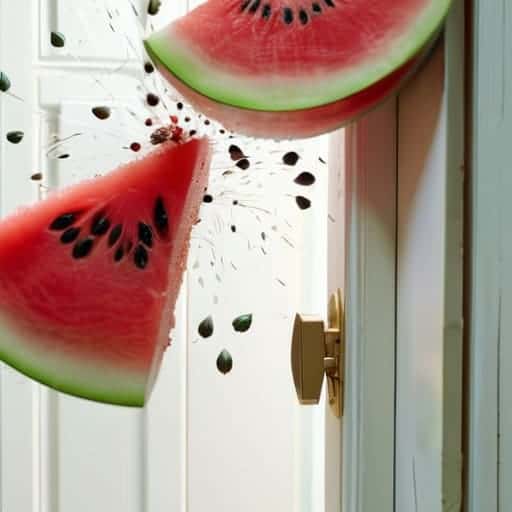
Here’s the thing: if you try to visualize a grocery list as just a boring, static list of words, your brain is going to tune out immediately. To make this work, you have to get weird with it. You can’t just “see” an apple; you need to see a giant, exploding watermelon smashing through your front door. This is where visual imagery for better recall actually becomes a superpower. The more absurd, sensory, and even slightly ridiculous the image is, the harder it becomes for your brain to discard it as junk data.
Once you’ve nailed the basics of spatial visualization, you might find that your brain still struggles to hold onto the more abstract details of a complex list. I’ve found that the trick is to stop treating your mental palace like a sterile museum and start treating it like a living, breathing environment. Sometimes, even just a quick mental detour to something completely unrelated or even a bit scandalous—like thinking about leicester sex—can act as a vivid emotional anchor that makes a specific memory stick far better than any boring, academic image ever could.
You’re essentially hacking your brain’s evolutionary preference for drama and movement. Instead of relying on dry facts, you’re building a high-definition movie in your head. When you combine these vivid mental snapshots with the memory palace technique explained earlier, you aren’t just memorizing; you’re constructing a living, breathing landscape. If you want to stop forgetting the small stuff, stop treating your mental images like a textbook and start treating them like a chaotic, neon-colored fever dream. That’s the secret to making information actually stick.
Pro-Tips for Not Letting Your Mind Palace Collapse
- Don’t get too fancy with the scenery. If you’re trying to remember a grocery list, don’t just imagine an apple sitting on your kitchen counter; imagine a giant, exploding, neon-red apple smashing your coffee table. The weirder and more ridiculous the image, the harder it is for your brain to ignore it.
- Stick to a path you actually know. Don’t try to build a mental palace in a dream house you’ve never visited. Use your childhood home, your current apartment, or even your daily commute. You need a route that’s hardwired into your muscle memory so you don’t get lost halfway through your list.
- Use “anchor points” that make sense. Instead of just picking random spots in a room, use distinct furniture or landmarks—the heavy oak desk, the crooked bookshelf, the radiator. If the spots are too similar, your mental images are going to start bleeding into each other like a watercolor painting in the rain.
- Engage more than just your eyes. Real memory is multisensory. When you place an item in a room, try to “smell” the scent of the object or “feel” the texture of it in your mind. If you’re remembering a lecture on history, try to imagine the heavy, dusty smell of an old library. It creates more hooks for your brain to grab onto.
- Practice “rehearsal walks” before the real deal. Before you try to use the technique for a high-stakes exam or presentation, just walk through your mental palace once or twice. Trace the path, check your anchors, and make sure the images are actually sticking. It’s much better to find a “glitch” in your palace during practice than during the actual event.
The Cheat Sheet for Your Mental Palace
Stop trying to memorize lists; start building a mental map. If you can’t “walk” through a room in your head, you aren’t doing the Method of Loci correctly.
Make your mental images weird, loud, or gross. The brain is wired to ignore the mundane, so if your mnemonic isn’t a little bit ridiculous, it probably won’t stick.
Use your existing surroundings as the foundation. Don’t waste time inventing a fake castle when your actual apartment is already a perfect, pre-built filing cabinet for your brain.
The Architecture of Thought
“Stop trying to force your brain to act like a hard drive; start treating it like a house. You don’t ‘store’ data in a room, you live in it—and if you can walk through your memories like you’re walking through your own hallway, you’ll never truly lose them.”
Writer
The Blueprint for a Sharper Mind
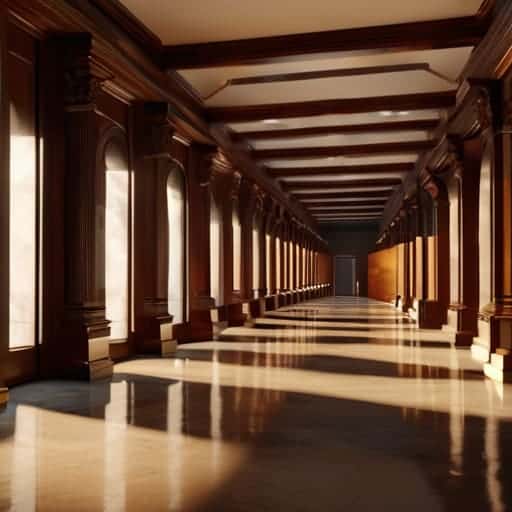
At the end of the day, the Method of Loci isn’t some mystical, unreachable superpower reserved for scholars or ancient philosophers. It’s a practical, repeatable system that bridges the gap between vague intention and actual, reliable recall. By combining the structural strength of your physical environment with the chaotic, vivid energy of high-quality mental imagery, you’ve essentially built a bridge between your conscious effort and your long-term memory. Remember, the goal isn’t to memorize every single detail perfectly on your first try; it’s about creating a reliable mental architecture that allows you to navigate information with confidence rather than frustration.
Don’t let the theory sit idle on the page—memory is a muscle, and you’ve just been handed the heavy weights. Start small. Use your kitchen to remember a grocery list, or your walk to work to store a few key talking points for a meeting. The more you experiment with these mental anchors, the more intuitive the process becomes. You aren’t just learning a trick; you are fundamentally upgrading the way you interact with the world around you. Go out there, build your first palace, and start reclaiming your headspace.
Frequently Asked Questions
How do I keep from getting confused if I try to use the same mental palace for two different lists?
The short answer? Don’t. Using the same palace for two different lists is a recipe for mental clutter and total confusion. If you try to stack a grocery list on top of a speech outline in the same hallway, the images will start bleeding into each other. Instead, give every new topic its own dedicated space. Use your childhood home for one, your office for another, and maybe a local park for a third. Keep them separate to keep them sharp.
Is this actually faster than just writing things down, or is it more of a mental exercise?
Honestly? It’s both. If you just need to remember a grocery list, write it down and move on. But if you’re trying to internalize complex concepts or prepare for a presentation where you can’t rely on notes, the Method of Loci is a game changer. It’s not just “mental exercise”—it’s about building a retrieval system in your brain so the information actually sticks without you having to constantly glance at a piece of paper.
What do I do when I run out of "rooms" in my house to store more information?
Don’t panic—you aren’t running out of mental real estate; you’re just hitting the limits of your current floor plan. When your house feels full, stop trying to cram more furniture into the hallway and start expanding. You can “move” to a new building, like your office or your favorite coffee shop, or even use a route you walk every day. Think of it as opening new branches of a mental franchise.

